
Benefits of surprise staff gift boxes for UK HR teams

Yes, surprise staff gift boxes work. When they feel genuinely thoughtful rather than transactional, they produce measurable lifts in morale, engagement, and short-term productivity. Three signals make the business case quickly:
Recognition drives retention. Research consistently links structured recognition programmes to lower voluntary turnover and stronger engagement scores, yet many employees go an entire year without receiving any gift or formal acknowledgement from their employer.
Presentation changes behaviour. Field experiments on monetary gift presentation found that the same gift delivered with thoughtful wrapping produced significantly higher participation and better work quality than plain cash. The packaging is not decoration; it is part of the message.
Surprise amplifies the signal. Unlike a scheduled bonus, an unexpected gift carries an emotional charge that a predictable reward cannot replicate. Workhuman’s research on morale tactics lists surprise treats among the most affordable and effective interventions available to managers.
Table of Contents
What are the real business benefits of surprise staff gift boxes?
The benefits of surprise staff gift boxes span six areas that HR leaders and corporate managers can measure and report on.
Morale. A well-chosen gift signals that individuals matter beyond their output. Corporate gifting research shows that intentional gifts shift employee sentiment quickly, particularly when they arrive unexpectedly.
Engagement. Surprise recognition creates an emotional peak that re-anchors an employee’s connection to their team and employer. Engagement scores tend to rise in pulse surveys taken within two weeks of a recognition event.
Retention. Recognition programmes correlate with lower voluntary turnover. When employees feel seen, they are less likely to respond to external recruitment approaches.
Productivity. The red-envelope field experiments demonstrated that thoughtful presentation of a gift increased both participation in extra tasks and the quality of work delivered, a direct productivity signal.
Team cohesion. Applied research in sports contexts found that recognising gift-giving behaviour within a team increased assists and wins, suggesting that a culture of appreciation has a cascading effect on collaboration.
Employer brand. Employees who feel genuinely appreciated become advocates. They share their experience with peers and on platforms like Glassdoor, strengthening your ability to attract talent.
The differentiator is thoughtfulness, not spend. A £15 letterbox gift with a handwritten note often lands harder than a £50 generic hamper, because it communicates that someone took time to consider the individual.
Why does surprise and presentation matter so much?
Presentation changes how a recipient interprets the gift at a psychological level. A plain cash transfer reads as a transaction; the same amount wrapped with care reads as a relationship signal. That distinction drives very different behavioural responses.
The red-envelope field experiments are the clearest evidence of this. Participants who received a monetary gift in a decorated red envelope were significantly more likely to volunteer for additional tasks and to deliver higher-quality work than those who received identical cash in a plain envelope. The researchers attributed this to reference dependence and reciprocity: a thoughtful presentation raises the perceived value of the gift above its face value, triggering a desire to give something back.
In a workplace context, this means the box itself, the tissue paper, the branded card, and the personalised note are not cosmetic choices. They are the mechanism through which a gift becomes relational rather than transactional.
Pro Tip: Add a short handwritten or printed personal note from the line manager, not just HR. A message that references a specific contribution (“your work on the Q3 pitch made a real difference”) multiplies the emotional impact and reinforces the recognition as genuine rather than automated.
When should you send surprise gift boxes in a UK workplace?
Timing matters as much as content. The occasions below consistently produce the strongest responses, particularly for remote and hybrid teams where a physical gift removes the barrier of attendance entirely.
Onboarding. A welcome box arriving on day one or before the first day sets a tone of warmth and belonging before a new starter has even logged in.
Project completion. After an intense sprint or a successful campaign, a surprise gift acknowledges the effort without waiting for a formal review cycle.
Personal milestones. Work anniversaries, promotions, and life events (a new baby, a house move) are moments where recognition feels deeply personal.
Wellness check-ins. A care package during a demanding period, such as a busy quarter or a restructure, communicates that leadership notices pressure and cares about well-being.
Ad-hoc recognition. The most powerful use case is often the least scheduled: a manager spotting exceptional effort and sending a gift within days. Speed of recognition amplifies its impact.
Remote team moments. Research on colleague gifting highlights a growing preference for thoughtful, deliverable gifts over enforced social events, particularly among remote workers who cannot attend an office celebration.
On cadence: occasional surprise gifts and scheduled recognition serve different purposes. Scheduled recognition (annual awards, service milestones) provides predictability and fairness. Surprise gifts create emotional peaks that scheduled programmes cannot. The most effective programmes use both, with surprise boxes reserved for genuine moments rather than calendar-driven obligations.
How to design high-impact surprise staff gift boxes
A structured approach prevents the most common mistakes and keeps the experience consistent across a large cohort.
Define the objective. Are you welcoming, retaining, re-engaging, or celebrating? The objective shapes every other choice.
Set a per-person budget. Entry-level boxes (under £15) work well for large cohorts and letterbox delivery. Mid-range (£20–£40) suits project recognition. Premium (£50+) is appropriate for long-service or senior milestones.
Choose items for relevance, not volume. Two or three high-quality, considered items outperform a box stuffed with generic fillers. Consider curated coffee subscriptions as a warm, personal addition that suits most tastes.
Add a personal note. Employees consistently report that handwritten or personalised notes increase the perceived thoughtfulness of a gift more than any single product upgrade.
Brand subtly. A branded box or tissue paper reinforces company identity without making the gift feel like a marketing exercise. Sayheygifting’s custom branded corporate gift boxes let you add your logo without overwhelming the personal feel.
Pack sustainably. Eco-friendly packaging is increasingly important to employees and reflects well on your employer brand. Recyclable or compostable materials are now widely available at no significant cost premium.
Confirm logistics. For remote staff, letterbox-friendly sizing is non-negotiable. Boxes that require a signature or cannot fit through a standard letterbox create friction and undermine the surprise.
Pro Tip: Before placing a bulk order, collect dietary requirements and any known allergens. A gift containing nuts sent to someone with an allergy is not just a wasted gesture; it is a welfare issue. A simple pre-order form or a check against your HR records takes minutes and prevents a serious misstep.
A short delivery email keeps the surprise intact while allowing a follow-up conversation:

How do you measure the impact of staff gift box programmes?
Measurement turns a feel-good initiative into a defensible business investment. Track these KPIs across three time horizons:
KPI | Measurement method | Timeline |
Pulse survey sentiment score | Short 3-question survey post-gift | within two weeks |
Employee Net Promoter Score (eNPS) | Quarterly eNPS survey | — |
Voluntary turnover rate | HR system data | — |
Participation in voluntary initiatives | Sign-up rates for optional programmes | — |
Qualitative feedback | Manager check-in notes or open-text survey | several weeks |
Run a pilot with a cohort of 30–50 employees before scaling. Compare sentiment scores and participation rates against a control group that did not receive a gift during the same period. This approach gives you a defensible signal without requiring a full programme rollout.
Common pitfalls, UK legal considerations, and how to avoid them
Even well-intentioned programmes can misfire. The most common issues, and their fixes, are below.
Perceived unfairness. If some teams receive gifts and others do not, resentment follows. Set clear, published criteria for who receives a gift and why, before you launch.
One-size-fits-all choices. A single box sent to 200 people with no dietary or cultural consideration signals the opposite of thoughtfulness. Offer a small selection or collect preferences in advance.
Low-quality items. A poorly made product reflects on the company. Fewer, better items always outperform a box packed with cheap fillers.
Poor timing. A gift arriving during a redundancy consultation or immediately after a pay freeze will be read with suspicion. Context matters.
Tax and payroll note: Under HMRC’s trivial benefits rules, gifts to employees may be exempt from tax and National Insurance if they cost £50 or less per person, are not cash or a cash voucher, are not a reward for performance, and are not contractual. Gifts above this threshold, or those that do not meet all conditions, may be treated as a benefit in kind. Always involve your payroll team before launching a bulk programme, and check the current HMRC guidance on trivial benefits for your specific circumstances.
On data privacy: collecting home addresses for delivery requires a lawful basis under UK GDPR. Use a consent-based collection form and store addresses only for the duration needed. Delete them once the programme concludes.
Short implementation examples and quick wins
Remote team onboarding: A UK-based technology company sent a branded welcome box to every new starter’s home address before their first day. The box included a personalised note from the hiring manager, a quality notebook, and a small snack selection. Onboarding satisfaction scores improved noticeably in the weeks that followed, and new starters reported feeling connected to the team before they had attended a single meeting.
Post-campaign recognition: A sales team completing a demanding three-month campaign received a surprise letterbox gift the week after results were announced. The gift arrived with a note referencing the team’s specific achievement. Managers reported a visible lift in energy during the following week’s planning sessions.
Three quick wins you can implement this week:
Send a letterbox-friendly gift to one team that has recently delivered strong results, with a personal note from their manager.
Add a small charity tie-in: include a card noting that a donation has been made in the team’s name, which deepens the sense of shared values.
Schedule a brief manager follow-up call two days after the gift arrives to reinforce the recognition in conversation.
Corporate gifting research confirms that the combination of a tangible gift and a personal follow-up produces a stronger and more lasting sentiment shift than either gesture alone.
Key takeaways
Surprise staff gift boxes produce their strongest results when thoughtfulness and presentation are prioritised over spend, making them one of the most cost-effective employee morale boosters available to UK HR teams.
Point | Details |
Thoughtfulness beats spend | A personalised note and quality packaging lift perceived value above face value, driving reciprocity. |
Surprise timing amplifies impact | Unexpected gifts create emotional peaks that scheduled recognition programmes cannot replicate. |
Measure with a pilot first | Track pulse survey scores, eNPS, and participation rates across a 30–50 person cohort before scaling. |
Check HMRC trivial benefits rules | Gifts of £50 or under per person may be tax-exempt; involve payroll before any bulk programme. |
Sayheygifting for UK teams | Sayheygifting offers letterbox-friendly, custom branded, and build-your-own employee gift boxes with UK delivery. |
Why thoughtful surprise beats generic swag every time
The conventional wisdom in corporate recognition is that consistency matters most: regular, predictable rewards that everyone receives on the same schedule. There is merit in that view for fairness. But it misses something important about how human motivation actually works.
Predictable rewards become expected. Once an employee anticipates a gift at Christmas or on their work anniversary, it stops functioning as recognition and starts functioning as an entitlement. The moment it fails to arrive, it generates dissatisfaction rather than gratitude. Surprise gifts sidestep this entirely. They arrive when least expected, which is precisely when they carry the most emotional weight.
The evidence from the red-envelope experiments reinforces this: the same monetary value, presented differently, produces measurably different behaviour. That is a remarkable finding for HR teams working with constrained budgets. You do not need to spend more; you need to present better and time it more thoughtfully.
My practical recommendation: run a 50-person pilot with a mid-range box, a personalised note, and a six-week measurement plan. Track pulse survey sentiment before and after. The data will make the case for scaling far more convincingly than any theoretical argument.
Sayheygifting makes it easy to run your first pilot
Ready to put the evidence into practice? Sayheygifting offers employee gift boxes designed specifically for UK corporate teams, from letterbox-friendly options that reach remote staff without a signature required, to fully custom branded gift boxes that carry your company’s identity with warmth rather than corporate stiffness. You can build your own gift box to match your budget and your team’s preferences, with sustainable packaging included as standard.
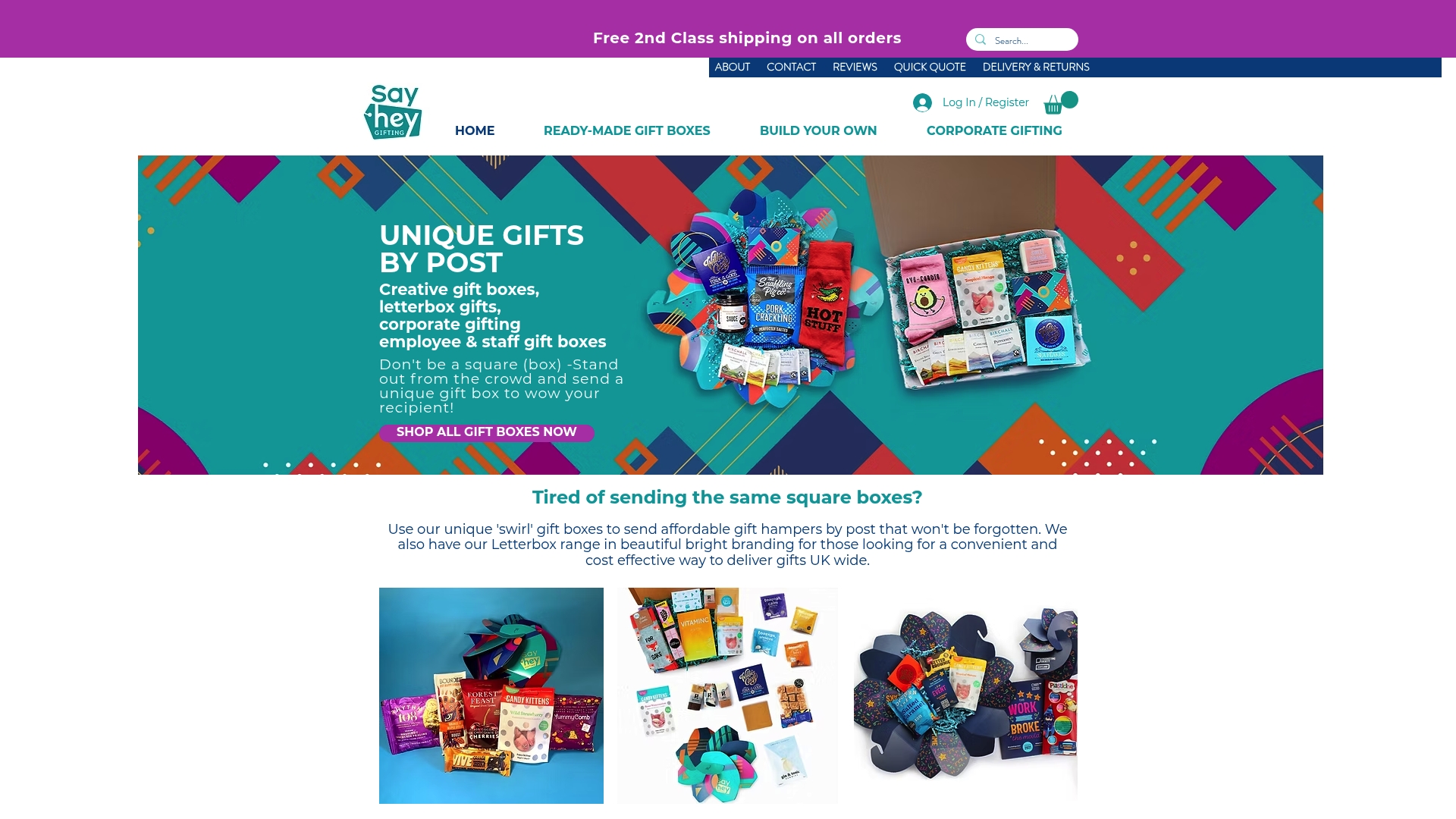
Whether you are planning a 10-person welcome programme or a 200-person recognition campaign, Sayheygifting handles UK fulfilment so your team can focus on the message, not the logistics. Request a bulk quote or order a sample box directly from the employee gift box page and see the difference a thoughtful, well-presented gift makes before you commit to a full rollout.
Further reading and UK-focused sources
HMRC trivial benefits guidance: the primary source for checking tax treatment of staff gifts; confirm thresholds and conditions with your payroll team.
Red-envelope field experiments (AEA): the foundational academic evidence on how presentation affects behavioural response to gifts.
How corporate gifting impacts employee morale: a practitioner summary of how intentional gifting shifts sentiment and employer perception.
How to boost employee morale: effective strategies: Workhuman’s practical guide to morale tactics, including surprise treats and recognition frequency.
Can gift-giving affect team performance?: applied research linking recognition of giving behaviour to measurable team performance improvements.
Sayheygifting employee gift boxes: implementation resources, ready-made options, and UK delivery information for HR teams planning a pilot.
Recommended
Comments