
Reduce Turnover: 5 Ready Made Gifts That Give Back for HR Teams

“Gifts that give back” means corporate gift boxes, hampers and letterbox care packages that genuinely serve the person receiving them, not branded clutter destined for a drawer. The recommended approach for 2026 is simple: choose practical, personalised boxes tied to a real recognition moment, or offer a flexible digital option where physical delivery is tricky. Sayheygifting builds exactly this kind of gifting, from ready-made boxes to bespoke letterbox builds.
TL;DR:
Personalisation and choice drive gift effectiveness, with 73% of employees valuing personal relevance and 54% preferring gift cards over physical items.
Building default allergen-free and gender-neutral gift boxes, with optional upgrades, ensures inclusivity and avoids alienation.
Smaller, more frequent recognition gifts scattered throughout the year improve motivation more than single large annual presents.
Automating address collection, fulfillment, and tracking enhances scalability and reduces administrative burdens for dispersed teams.
Gift timing and personalisation matter more than budget size, with well-chosen, timely gifts generating lasting satisfaction around six months.
Table of Contents
Why purpose-driven employee gifts move the retention needle
The numbers on this are unusually clear for something so often treated as a nice-to-have. Some 72% of employees say a work anniversary gift would make them more likely to stay at their company, yet only 47% have ever actually received one. That gap between what would work and what companies actually do is where most of the missed opportunity sits.
Personalisation is the single biggest driver of whether a gift feels meaningful at all. Preference splits by cohort too: many staff would rather have a gift card than a physical item, while Gen Z employees tend to respond more strongly to gifts that feel connected to a genuine moment of recognition rather than a generic annual perk.
Stat check: 54% of employees prefer a gift card over a physical item, and 73% say personalisation matters most. Both figures argue for choice, not a single fixed box for everyone.
For hybrid and remote teams, a well-timed gift can substitute for the office chatter and impromptu thanks that in-person colleagues get for free. Onboarding gifts, in particular, do double duty: they welcome someone and quietly signal what the company actually values.
What goes into a gift box people actually want
Not every item earns its place in a box. The best employee gifts tend to be things people would buy for themselves but perhaps wouldn’t quite splash out on, paired with something that feels personal rather than promotional.
Build your checklist around these categories:
Daily-carry items: a good notebook, a quality water bottle, or a well-made tote that gets used long after the ribbon comes off.
Wellness extras: calming teas, hand cream, an eye mask, or a small self-care item that signals “we thought about you,” not just “we sent you something.”
Useful tech accessories: a cable organiser, a portable charger, or a laptop stand, particularly for anyone working from a kitchen table.
Experience vouchers: a coffee subscription, a streaming credit, or a spa treatment for when a physical item isn’t the right fit.
Choice menus: instead of guessing sizes or flavours, offer two or three curated options so recipients pick what suits them.
Branding matters more in its absence than its presence. A discreet embossed logo on quality packaging reads as thoughtful; a giant logo stamped across a t-shirt reads as marketing. Sayheygifting’s sustainable gift examples lean into this: understated branding, recyclable packaging, and contents chosen for genuine use rather than shelf appeal.
Don’t overlook dietary labelling, allergen information, and size ranges either. A hamper that assumes everyone drinks alcohol or eats dairy will alienate exactly the people you’re trying to make feel included.
Pro Tip: *Build one “safe default” box with no allergens, no alcohol, and gender-neutral contents, then offer two optional upgrades.
Budgeting and scaling gifting without the admin headache
Price bands should follow the size of the moment, not a flat company-wide rule. Spot recognition gifts can be low-cost, anniversary gifts typically vary with tenure, and milestone hampers for longer anniversaries tend to be higher value, reflecting how rarely they’re given. This isn’t extravagance for its own sake: recipients of a well-chosen employer gift report a satisfaction lift lasting around six months, which is a far better return than the cost of replacing someone who leaves.
Frequency beats size for most recognition budgets. Smaller, more frequent gifts spread across the year tend to sustain motivation better than a single lavish annual gesture, so consider splitting an annual gifting budget across three or four smaller touchpoints instead of one big spend.
To scale this without your HR team drowning in spreadsheets, work through this sequence:
Centralise address collection once, ideally through your HRIS, rather than chasing people by email every time.
Decide fulfilment method: direct-ship from supplier to home works well for distributed teams; central office fulfilment suits co-located staff.
Flag cross-border staff early, since customs charges and delivery times can affect the timing of international gifts.
Set automation triggers in your HR system for anniversaries, onboarding dates and life events so nothing relies on someone remembering.
Track redemption and sentiment, not just spend, so you can report participation rates and qualitative feedback back to leadership.
Digital-first delivery genuinely earns its place for dispersed teams. Offering a choice between a physical box and a digital voucher respects both logistics and personal preference, and it’s increasingly the default rather than the exception.
Ready-made box ideas you can order this week
You don’t need to design a gifting programme from scratch. These five templates cover the moments HR teams ask about most often, and each can be ordered as-is or briefed to a supplier as a starting point.
Wellness letterbox: calming tea, a small self-care item, and a handwritten note. Ideal for onboarding week one or a wellbeing check-in after a tough project. Typically, £15 to £25.
Home comfort box: a quality blanket, a good mug, and a snack. Works well for remote staff birthdays or as a smaller milestone reward, usually £25 to £40.
Work-from-home kit: an ergonomic accessory, a cable organiser, and a subtly branded item of apparel. Practical, daily-use contents that don’t scream “corporate swag,” priced around £30 to £50.
Milestone keepsake hamper: a premium item paired with a personalised plaque or engraved piece, reserved for five, ten or fifteen-year anniversaries. Expect £75 upwards.
Vegan or dietary-specific care package: clearly labelled vegan snacks, cruelty-free skincare, and no ambiguous ingredients. Essential for inclusive programmes and worth offering as standard, not an afterthought.
Sayheygifting’s vegan hampers and hampers for men both fit directly into this framework, and the build-your-own gift box option lets you mix elements from several templates into one box. For quick apparel inspiration that avoids feeling like uniform, Modern Day Knight’s guide to meaningful men’s gifts is worth a look, and The J Coffee Collection’s coffee gift ideas work nicely as an add-on for the home comfort box.
Remember that 54% of employees would still rather receive a gift card than the physical item itself, so building a digital voucher option alongside any of these templates isn’t a compromise. It’s simply covering the preference that already exists in your workforce.
How to vet the social impact brands behind your gifts
If part of your gifting strategy involves suppliers who claim to give back, either through fair-trade sourcing, charitable partnerships, or ethical manufacturing, it’s worth checking the substance behind the claim before you put your company’s name next to it.
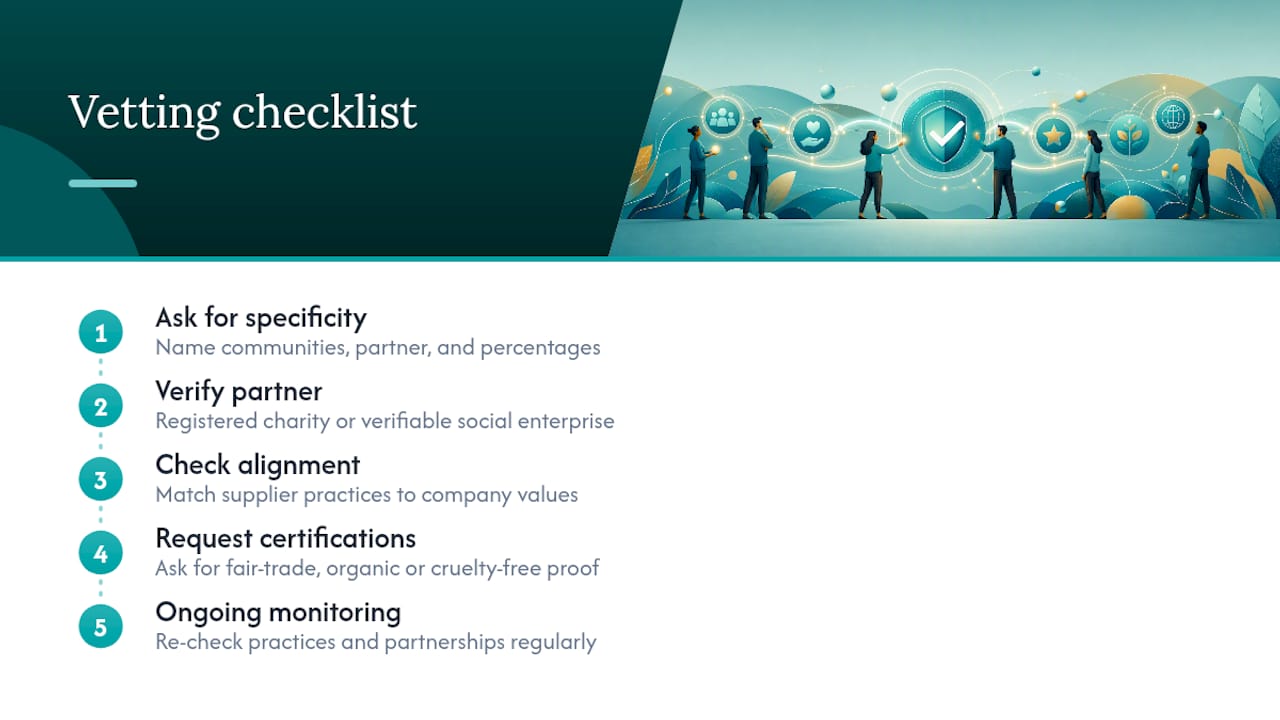
Start with specificity. A supplier who says “supports local communities” without naming which communities, which charity, or what percentage of proceeds go where is giving you marketing copy, not a policy. Ask for the actual partner organisation’s name and check it’s a registered charity or a verifiable social enterprise, not simply a phrase on packaging.
Check alignment with your own company values before signing off. A wellness-focused business gifting through a supplier with no environmental or ethical sourcing credentials sends a mixed signal to staff who notice these things more than procurement teams sometimes expect. If your organisation has publicly committed to sustainability, your gifting supplier’s packaging and sourcing should reflect that commitment, not undercut it.
Ask suppliers directly how they handle transparency. Do they publish where materials come from? Can they show certifications for fair trade, organic, or cruelty-free claims rather than just stating them? A supplier confident in its ethics will usually have this information ready without being asked twice.
Finally, treat this as an ongoing check, not a one-off audit. Supplier practices change, partnerships lapse, and a brand that was genuinely values-led two years ago may not be today.
Getting employees involved in choosing their own gifts
The single biggest engagement lever in any gifting programme is letting people have some say in what they receive. This doesn’t mean an open-ended survey that takes six weeks to collate; it means a curated set of choices that still feels personal.
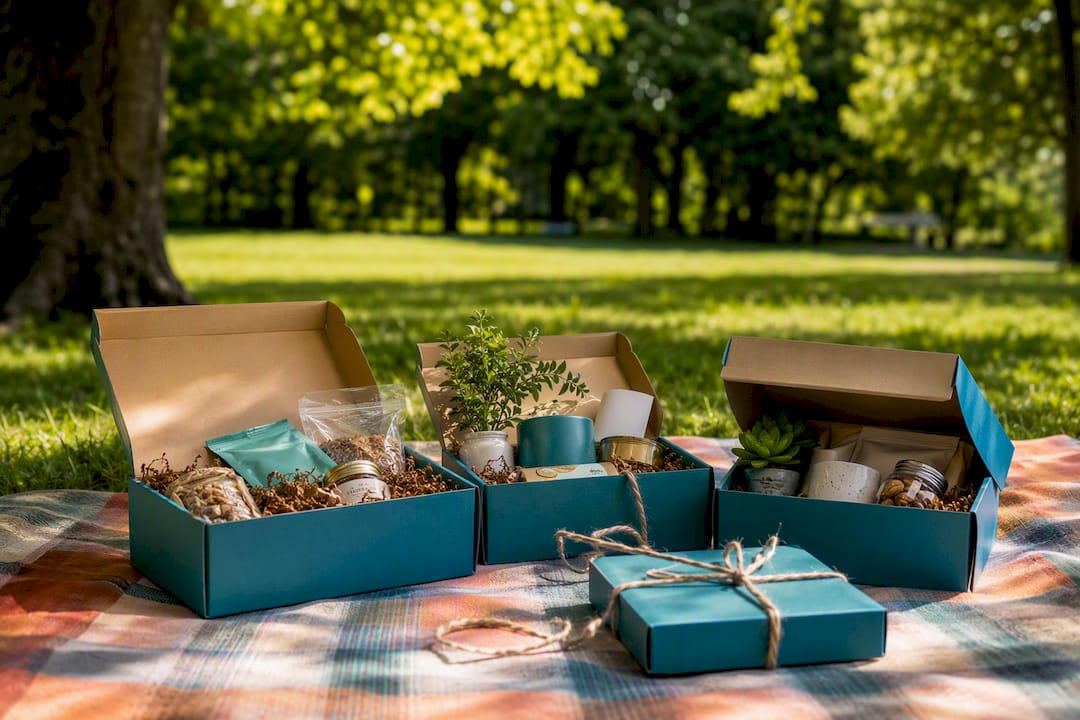
Pre-set choice menus work well here. Offer two or three curated box options, or a physical-versus-digital toggle, and let each recipient pick. This keeps personalisation genuinely feasible at scale without needing a bespoke build for every single person, and it turns a passive delivery into a small moment of agency.
Ask for input before you commit budget, not after the boxes have shipped. A short pulse survey asking what staff actually valued from last year’s gifting round, even five questions, tells you more than any benchmark report. Feed that back into next year’s supplier brief.
Make the recognition moment visible, not just the parcel. Pairing a gift with a short public shout-out, whether in a team meeting or a Slack channel, reinforces the recognition culture around the gift itself, rather than letting it arrive as an unexplained box on someone’s desk.
Finally, close the loop. A quick “did this land well?” follow-up, even informally, tells you whether your gifting budget is actually doing its job or just ticking a box on an HR calendar.
Author’s perspective: lessons from running corporate gifting programmes
The pattern that stands out most clearly across corporate gifting is how rarely price correlates with impact. A £15 letterbox gift with a genuinely personal note tends to land better than a £60 hamper that arrives generic and unexplained. Timing and personalisation do more heavying lifting than budget size ever will.
The pitfalls are predictable once you’ve seen them a few times. Over-branding turns a gift into an advert. Ignoring dietary needs turns a wellness gesture into an exclusion. And poor fulfilment timing, a gift arriving weeks after the anniversary it’s meant to mark, undoes most of the goodwill a gifting programme is meant to build.
If there’s one approach worth taking from this: combine automation to guarantee timing, choice to respect individual preference, and genuine quality over quantity of contents. Get those three right and the rest tends to follow.
— Craig
Let Sayheygifting handle your gifting programme
Sayheygifting removes the two things that usually stall a gifting programme: sourcing decent contents and managing fulfilment at scale. Ready-made employee gift boxes cover the everyday recognition moments, while the build-your-own gift box option lets you brief bespoke contents for anniversaries or client gifting without a minimum order that only makes sense for large enterprises.
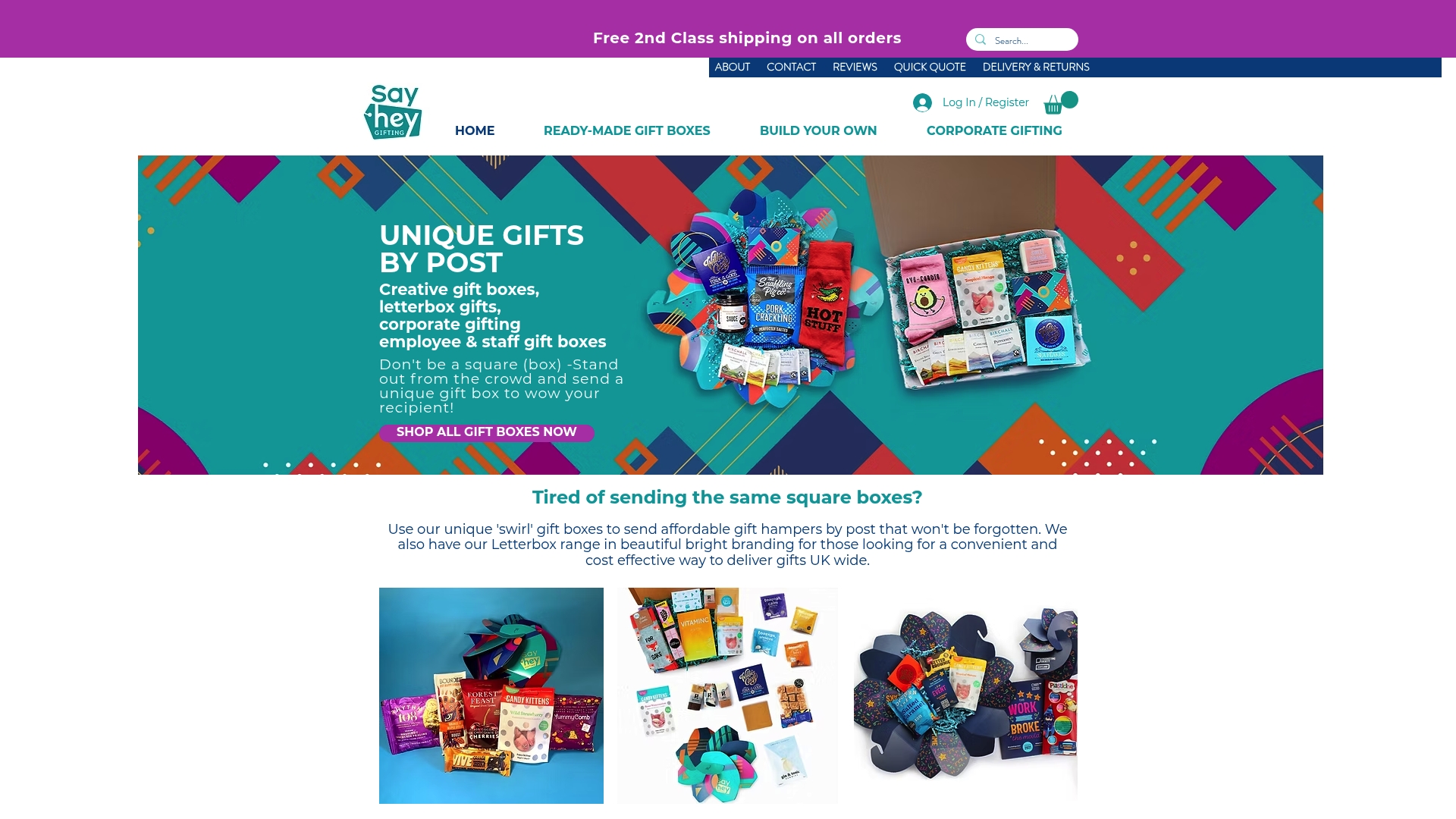
Vegan and dietary-specific hampers, letterbox gifts under £10, and bulk corporate orders all run through the same straightforward process: pick a template or build your own, confirm quantities, and Sayheygifting handles sourcing and dispatch. Lead times vary by order size and personalisation, so it’s worth requesting a quote early for anniversary or seasonal batches rather than the week they’re due.
If you’re ready to move from planning to ordering, browse the range of ready-made boxes or get in touch for a bespoke build tailored to your team’s size and budget.
Sources
FAQ
How far in advance should we order employee gift boxes?
For milestone anniversaries or seasonal batches, order at least two to three weeks ahead to allow for personalisation and address collection. Spot recognition gifts with simpler contents can often be turned around faster.
Are employee gifts tax-deductible or treated as a taxable benefit?
Treatment depends on the gift’s value and context, so check current HMRC trivial benefit thresholds with your accountant before finalising budgets, as small, infrequent gifts are often treated differently from cash-equivalent rewards.
How do we handle dietary restrictions and allergies in gift boxes?
Build a default allergen-free, alcohol-free, vegan-friendly base box, then offer optional upgrades, so you avoid excluding staff by assumption rather than by asking.
Is a digital gift card better than a physical box for remote teams?
Neither is universally better. Around 54% of employees prefer a gift card over a physical item, which is why offering a choice between a physical box and a digital voucher tends to outperform committing to just one format.
What’s a reasonable budget for a work anniversary gift?
Most anniversary gifts sit between £30 and £75, scaling up towards £75 for major milestones like five or ten years, with smaller spot recognition gifts typically under £25.
Recommended
Comments