
Outsourcing corporate gifting: a buyer's guide for HR teams

For most mid-size and larger organisations, outsourcing corporate gifting saves time, reduces logistical risk, and delivers far more consistent results than managing it in-house. If your team sends gifts to more than a handful of people, or across multiple locations, the recommended next step is simple: request a sample box and a written quote that breaks down unit cost, fulfilment fees, and lead times. Providers such as Say Hey Gifting build their service around exactly this brief, and independent roundups from outlets like Business Insider consistently recommend ordering early and leaning on a dedicated concierge for anything beyond a small batch.
Key Takeaways
Outsourcing corporate gifting works because a specialist partner combines curation, branding, and multi-address fulfilment into one accountable process that scales without adding internal workload.
Point | Details |
Outsource once scale rises | Distributed teams, recurring programmes, and executive gifting all favour an outsourced partner over in-house handling. |
Request a sample and written quote | Confirm unit cost, fulfilment fees, and lead times before committing to a bulk order. |
Budget for the full cost stack | Per-unit price, setup fees, customisation, warehousing, and shipping all affect the final quote. |
Check trust signals before signing | Case studies, a dedicated account manager, transparent pricing, and a sample box all indicate a reliable provider. |
Say Hey Gifting fits the full-service brief | It offers employee gift boxes, letterbox gifts, hampers, and bulk fulfilment with customisation for corporate programmes. |
Table of Contents
What are the benefits of outsourcing corporate gifting?
The clearest advantage is time. Sourcing products, negotiating with suppliers, packing boxes, and chasing couriers can eat weeks of an HR or procurement manager’s calendar, especially around Christmas or new-starter waves. Handing that work to a specialist gifting partner frees your team to focus on the relationships gifting is meant to strengthen, not the logistics behind it.
Scale matters too. A programme that works for 20 recipients often breaks at 200, when address errors, customisation mix-ups, and courier delays start compounding.
Time saved: no sourcing, packing, or courier management for your internal team.
Fewer logistics errors: specialist fulfilment reduces address mistakes and missed deliveries.
Easier multi-location and international shipping: partners already have carrier relationships and customs experience.
Consistent brand experience: every recipient gets the same quality and presentation, regardless of who processed the order.
Pro Tip: Ask any prospective partner how they handle a 5% error rate on address lists. Their answer tells you more about their operation than their pricing sheet ever will.
Beyond the operational wins, there’s a quieter benefit: employees and clients notice thoughtfulness, and a well-run gifting programme feeds directly into retention and how people talk about your culture. Established vendors in this space often position one-partner, end-to-end fulfilment as their core differentiator, and it’s easy to see why once you’ve tried coordinating five separate suppliers yourself.

What should a full-service gifting partner deliver?
A genuine full-service partner does far more than pack boxes. Before you sign anything, make sure the proposal covers the full lifecycle of a gifting programme, not just the products themselves.
Curation: a range of gifts matched to budget, occasion, and recipient type.
Personalisation and branding: logo placement, custom inserts, or bespoke packaging.
Kitting: assembling multiple items into a single, presentable box.
Storage: holding stock so orders can go out on demand rather than in one rushed batch.
Multi-address fulfilment: shipping to hundreds of individual addresses, not just one warehouse.
Returns handling: a clear process for undelivered or incorrect parcels.
Reporting and account management: visibility on what’s shipped, delayed, or returned.
Pro Tip: Insist on at least two rounds of sample approval before production. Check the physical print quality of any branding, not just a digital mock-up. Common gifting mistakes, like skipping proof approvals, tend to surface only after hundreds of boxes are already packed.
Ask about optional extras too: digital redemption pages, employee-choice stores, and sustainability reporting are increasingly standard among stronger providers.

What do outsourced corporate gifts typically cost?
Pricing usually breaks into several distinct line items, and a transparent quote should separate them clearly rather than bundling everything into one number.
Per-unit product cost: the price of the physical items inside each gift.
Setup fees: one-off charges for artwork, branding templates, or new packaging.
Fulfilment fees: per-parcel charges for picking, packing, and dispatch.
Customisation costs: engraving, printing, or bespoke inserts.
Warehousing fees: storage charges if stock sits with the provider between orders.
Shipping: often the most variable line, especially for international or multi-address drops.
Five factors push costs up or down: product quality, level of personalisation, number of delivery addresses, rush turnaround, and minimum order quantities.
Brief and quote: typically 1 to 2 weeks, longer for bespoke branding.
Sample approval: 3 to 7 working days per round.
Production: 2 to 4 weeks for standard bulk orders, longer for custom apparel or engraving.
Kitting and fulfilment: several days for a single warehouse drop, longer for distributed shipments.
Delivery: 2 to 5 working days domestically once dispatched.
Say Hey Gifting’s own logistics planning guide recommends building in buffer time at every one of these stages, particularly around Christmas.
Should you keep gifting in-house or outsource it?
The right answer depends on scale, complexity, and how much internal capacity you actually have to spare.
Small, one-off programme (under 20 recipients, single location): in-house is often manageable.
Distributed workforce (hundreds of addresses, remote or hybrid teams): outsourcing avoids logistical chaos.
Recurring year-end or seasonal gifting: outsourcing builds repeatable processes and better rates over time.
Executive or high-value client gifting: a specialist partner protects your brand’s first impression.
A quick decision checklist:
Budget per recipient below a modest threshold with simple, uniform gifts? In-house may suffice.
More than one delivery location or country involved? Lean outsourced.
Need for SLAs, tracking, or reporting? Outsourced almost always wins here.
No internal capacity to manage returns or address errors? Outsource.
If you’re unsure, a hybrid pilot, outsourcing one seasonal batch before committing fully, gives you real data without locking in a long-term contract.
How do you choose the right corporate gifting provider?
A strong supplier brief should ask direct questions and expect direct answers. Vague replies here are the clearest early warning sign of trouble later.
Questions to ask every shortlisted provider:
What’s your maximum fulfilment capacity per week, and can you prove it?
What SLA do you offer on delivery timelines and tracking accuracy?
How do you handle recipient data and address lists securely?
How many proofing rounds are included before production starts?
What’s your policy on damaged, lost, or returned parcels?
Trust signals worth prioritising:
Case studies or client testimonials with real outcomes.
A dedicated account manager or corporate concierge, rather than a rotating support inbox.
Transparent bulk pricing with no hidden fulfilment fees.
A sample box offered before you commit to a bulk order.
Clear SLAs on delivery windows and tracking visibility.
Retailers handling online corporate orders also flag secure checkout and data privacy as a baseline expectation, worth confirming with any provider before you hand over an employee address list. Red flags include vague fulfilment terms, no sample offer, an unclear returns policy, or an absence of any verifiable references.
What gift formats work best for corporate programmes?
Matching the format to the occasion matters more than chasing the most expensive option. A £15 letterbox gift sent at exactly the right moment often lands better than a £50 hamper sent generically.
Letterbox gifts: ideal for onboarding, birthdays, or lightweight thank-yous.
Curated hampers: suited to Christmas, milestones, or client relationship-building.
Tech kits: strong for onboarding and long-service recognition.
Voucher or digital redemption: useful for distributed teams without confirmed addresses.
Bespoke branded apparel: works well for events, conferences, and team launches, [Tekton LA’s guide to bulk apparel](https://tektonla.com/blogs/news/custom-logo-apparel-options-for-corporate teams) covers decoration methods worth briefing in.
Wellness packs: fitting for stress-heavy periods, health initiatives, or general appreciation.
Curated boxes generally register as higher perceived value than single-item gifts, worth remembering when budgets are tight. Gourmet options, such as coffee or tasting boxes explained in The Moustache Coffee Club’s buyer’s guide, remain a reliable middle-ground format. Minimum order quantities usually apply to personalised items, so confirm thresholds before finalising a brief.
How does a gifting partner actually run a project?
A well-run programme follows a predictable sequence, and knowing the steps helps you brief any provider properly.
Brief: you share budget, headcount, occasion, and delivery locations.
Curation: the partner proposes gift options matched to your brief.
Sample approval: you review and sign off physical samples.
Production: items are sourced, branded, and prepared at scale.
Kitting: individual boxes are assembled and checked.
Fulfilment: parcels are dispatched to single or multiple addresses.
Reporting: delivery confirmation and any exceptions are shared back with you.
Pro Tip: Build reporting into the brief from day one, not as an afterthought, it’s the difference between knowing a parcel is late and finding out from an unhappy employee.
A publisher’s note on outsourcing gifting
Having tracked corporate gifting programmes for several years, the pattern is consistent: the organisations that struggle are the ones that treat gifting as an afterthought rather than a process with real logistics behind it… If you want a second opinion on your brief, get in touch.
Ready to outsource your corporate gifting?
Sayheygifting handles the entire process end-to-end: curation, branding, kitting, and multi-address fulfilment, so your team never has to chase couriers or troubleshoot address errors again.
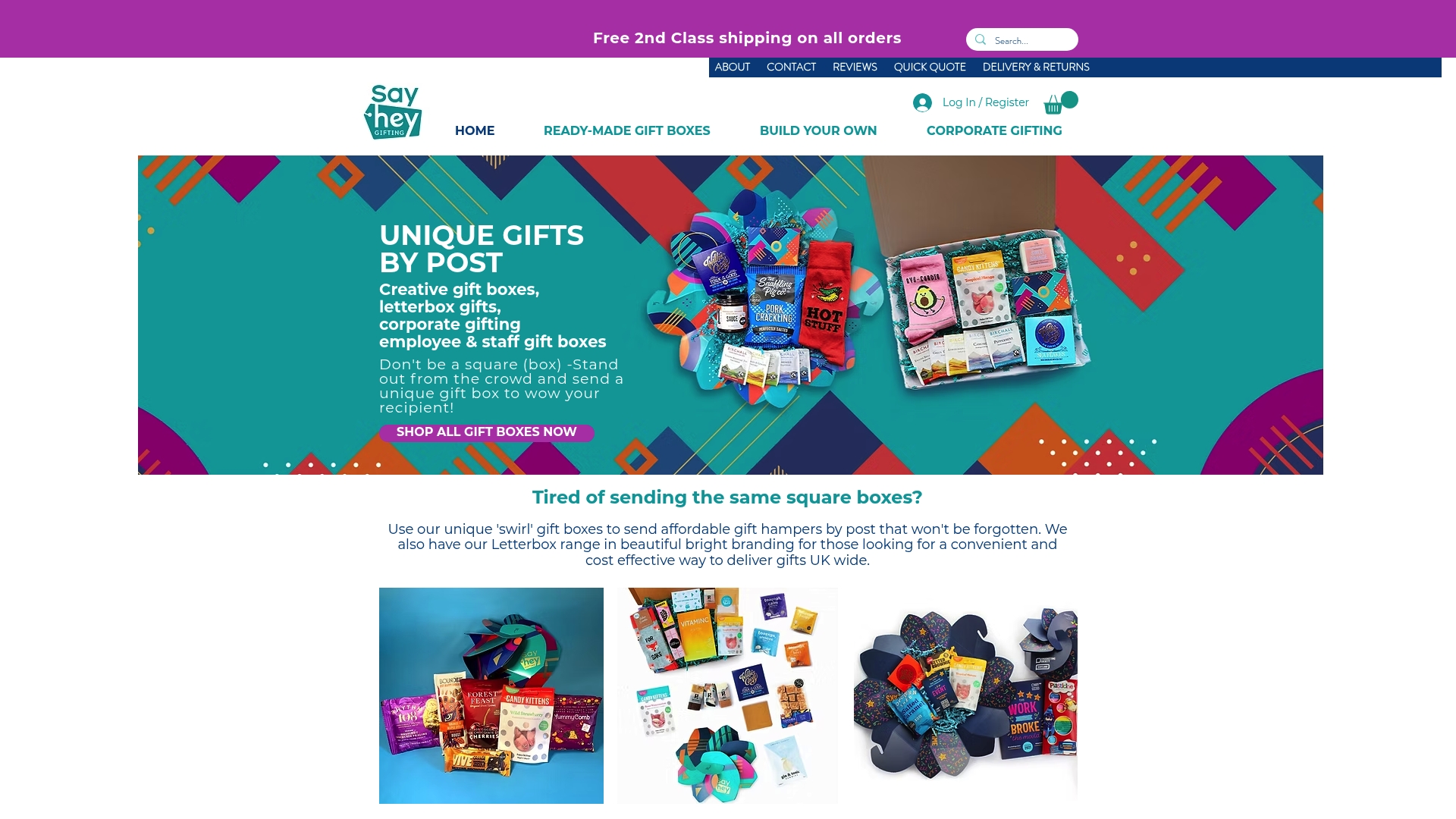
Whether you need employee gift boxes for a distributed team, letterbox gifts for onboarding, or a bespoke hamper programme for year-end, the service scales from single orders to hundreds of recipients without losing the personal touch. Every programme starts the same way: request a sample box and a written quote covering unit cost, fulfilment fees, and delivery timelines. Browse the employee gift box range or explore the full employee gifts and staff gifts collection to see what a properly briefed programme actually looks like before you commit.
Sources
The best corporate gifts for employees and clients — Business Insider
FAQ
Which companies handle corporate gifting?
Specialist gifting providers such as Say Hey Gifting handle the full process, from curation and branding through to bulk and multi-address fulfilment, rather than requiring HR teams to source and pack gifts themselves.
How much do companies spend on corporate gifting?
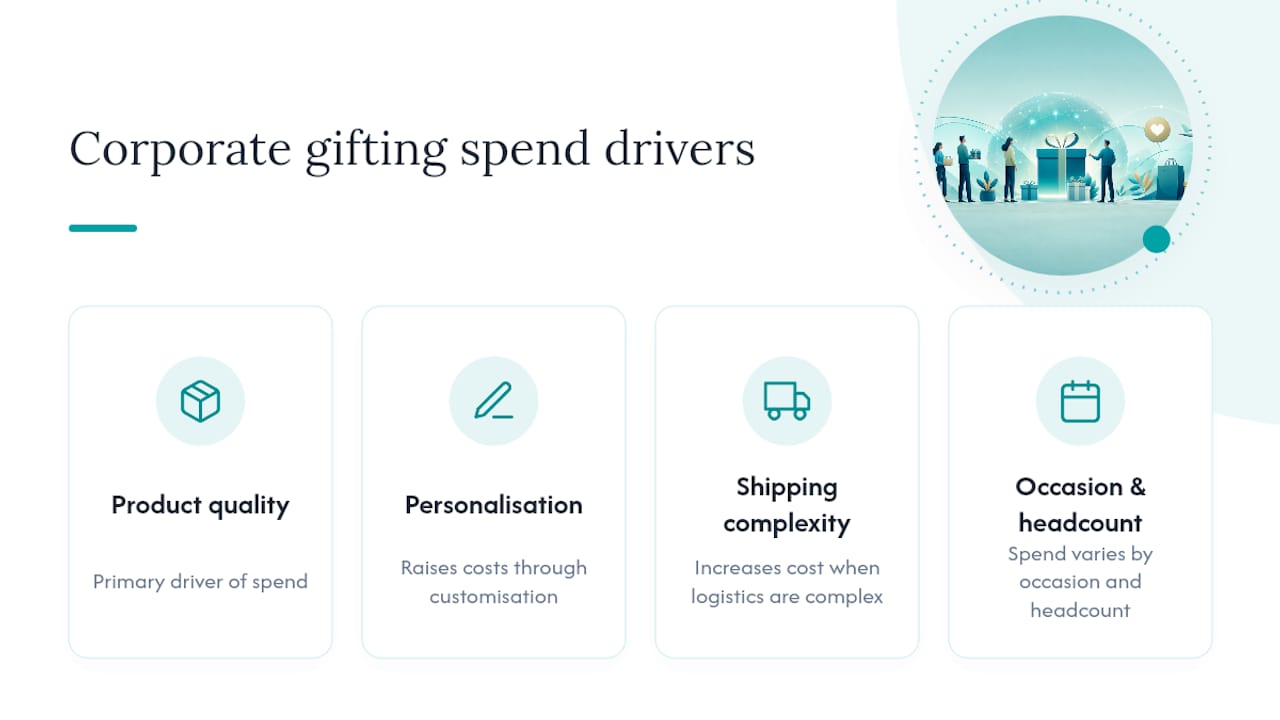
Spend varies widely by occasion and headcount, with costs driven mainly by product quality, personalisation, and shipping complexity rather than a fixed industry rate.
What are some examples of corporate gifting?
Common formats include letterbox gifts for onboarding, curated hampers for Christmas, tech kits for long service, and wellness packs for general appreciation.
Is corporate gifting B2B or B2C?
Corporate gifting sits primarily in B2B, since businesses purchase gifts for employees or clients, though the fulfilment often reaches individual home addresses much like a B2C delivery.
Recommended

Comments