
Staff gift delivery options explained for HR teams

Staff gift delivery options explained refers to the three primary methods organisations use to distribute gifts to employees: digital delivery via email or SMS, direct-to-home shipping, and centralised office distribution. Choosing the right method is not a minor logistical detail. It directly shapes how appreciated your team feels, how smoothly your programme runs, and whether your investment in employee recognition actually lands. With hybrid and remote working now standard across most UK organisations, HR professionals and corporate event planners need a clear, practical framework to match delivery method to workforce reality.
What are the main staff gift delivery options explained?
Corporate gift delivery methods fall into three core categories, each with distinct strengths depending on your team’s location, the occasion, and your budget.
Digital delivery uses email or SMS to send gift codes, e-vouchers, or redemption links directly to employees. It is the fastest method, with near-instant distribution and no physical logistics to manage. Digital delivery suits remote teams, last-minute recognition moments, and situations where personalisation means letting employees choose their own reward.

Direct-to-home shipping sends physical gifts straight to each employee’s home address. This method works best for dispersed or hybrid teams where a shared office drop-off is impractical. It creates a genuinely personal moment, because the gift arrives at someone’s door rather than on a shared desk. The trade-off is higher per-unit shipping cost and the need for accurate, up-to-date home addresses.
Centralised office distribution involves sending a bulk shipment to one location, where gifts are then handed out at a team event or left at workstations. This method reduces shipping costs significantly and works well for in-office teams or planned events like end-of-year celebrations. The limitation is obvious: it excludes anyone working remotely that day.
Method | Speed | Cost per unit | Personalisation | Logistics complexity |
Digital delivery | Instant | Low | High (choice-based) | Low |
Direct-to-home shipping | 2–5 days | High | High (physical) | High |
Centralised office distribution | Planned | Low | Moderate | Moderate |
Pro Tip: For hybrid teams, consider combining methods. Send physical gifts to home addresses for remote employees and use centralised distribution for those attending a team event on the same day.
How do you plan and execute staff gift delivery at scale?
Operational planning separates a gifting programme that delights from one that creates HR headaches. The most common failure point is not the gift itself. It is the logistics behind getting it to the right person at the right time.
Order 3–5% more units than your headcount requires. That buffer covers damaged goods, late joiners, and replacement requests without delaying the whole programme. Running out of stock mid-delivery is one of the most avoidable problems in corporate gifting, and a small over-order prevents it entirely.
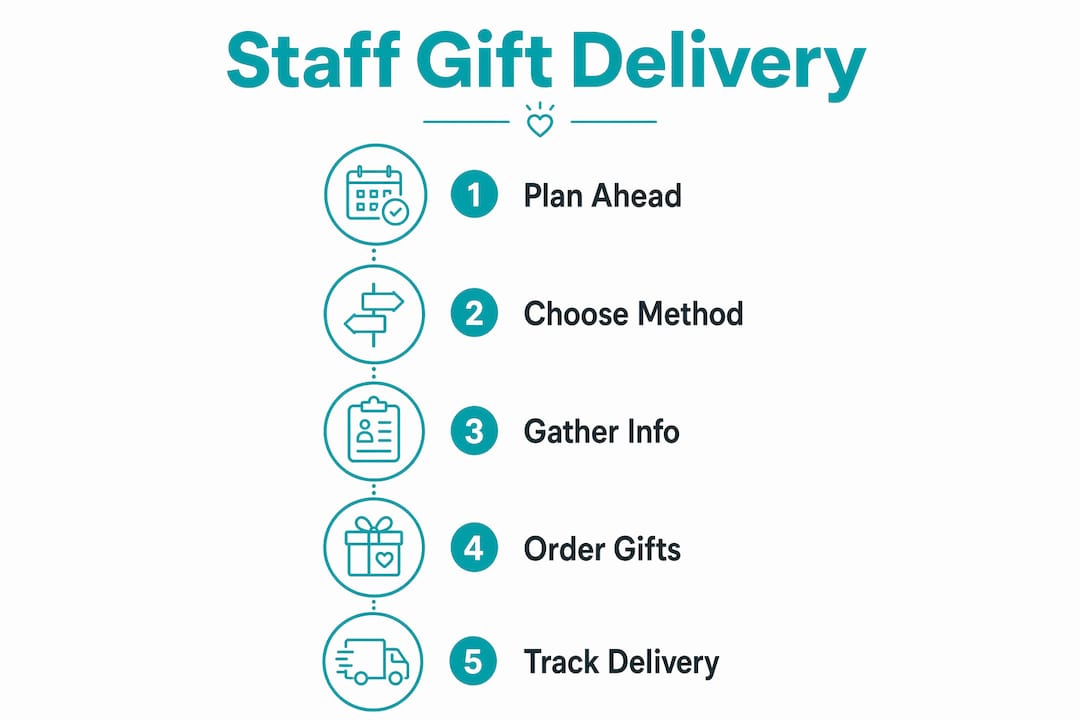
Plan delivery backwards from the date employees must receive the gift, not from the date you place the order. Factor in production lead times, courier transit, and any customs delays for international shipments. A gift that arrives a week after Employee Appreciation Day loses most of its impact.
Address collection deserves its own process. For home shipments, gather and validate addresses well in advance. Employees move, and HR records are often out of date. A simple online form sent four to six weeks before your delivery date gives you time to chase missing responses and correct errors.
Documented contingency plans for replacements, missed deliveries, and size swaps prevent delays and protect your team from a flood of individual queries. Assign one person to own the delivery tracker and set clear response times for issues.
Pro Tip: When working with a fulfilment partner or third-party logistics provider, agree on a named point of contact before the programme launches. A single escalation route saves hours when problems arise.
How does personalisation improve staff gift delivery outcomes?
Allowing employees to choose their own gifts enhances perceived value and reduces waste compared to a uniform gift. Choice communicates respect. It signals that you see your team members as individuals, not just headcount.
For HR planners managing large or diverse teams, personalisation does not have to mean individual curation for every person. A curated selection of three to five options covers most preferences while keeping logistics manageable. Consider these dimensions when building your selection:
Dietary and lifestyle needs: avoid gifts centred on alcohol, meat, or dairy without an alternative
Cultural considerations: be mindful of religious observances and cultural norms, particularly in multinational teams
Accessibility: ensure packaging and redemption processes work for employees with disabilities
Gender neutrality: offer options that do not assume gender preferences
Packaging and a personalised message significantly improve how a gift is received. Presentation affects whether a gift feels generic or genuinely thoughtful. A handwritten-style note, even when printed at scale, adds warmth that a plain parcel cannot replicate.
A gift that arrives beautifully presented, addressed by name, and accompanied by a personal message does not just say ‘thank you.’ It says ‘we thought about you specifically.’ That distinction is what turns a transactional gesture into a lasting memory.
Sayheygifting’s build your own gift box approach lets you curate contents that reflect your team’s personality, making each delivery feel considered rather than corporate.
What delivery options suit different occasions and team setups?
Matching your office gift shipping options to the occasion and workforce type is the difference between a programme that resonates and one that feels like a tick-box exercise.
Onboarding and welcome gifts
Welcome gifts delivered in the first week of employment set a long-term positive tone more effectively than gifts given later. Home shipment is the natural choice here, since new starters may not yet be in the office regularly. A letterbox gift works particularly well for onboarding because it arrives neatly, requires no recipient presence, and fits through a standard letterbox without a failed-delivery card.
Seasonal and milestone recognition
Timing gifts to corporate events or milestones maximises impact. Co-ordinating delivery with Employee Appreciation Day, work anniversaries, or end-of-year celebrations creates a shared moment rather than a staggered trickle of parcels. Centralised office distribution suits seasonal gifts for in-office teams. Home shipment suits remote and hybrid employees receiving the same gift on the same date.
Frontline and deskless workers
Frontline teams often lack a permanent desk address. Home shipment is the most reliable method. Letterbox gifts are effective for remote or hybrid teams because they remove the need for recipient presence and lower delivery failure risk. Their compact form suits everything from onboarding to seasonal thank-yous.
Staff gift delivery options checklist
Use this checklist when planning any gifting programme:
Confirm workforce split: remote, hybrid, and in-office headcount
Choose delivery method per employee group
Collect and validate home addresses at least four weeks before despatch
Order 3–5% buffer stock above headcount
Plan backwards from the required receipt date
Confirm packaging, messaging, and personalisation requirements
Assign a delivery tracker owner and set issue-response times
Brief your fulfilment partner or internal team on contingency procedures
Key takeaways
Choosing the right corporate gift delivery method requires matching your approach to workforce location, occasion, and personalisation goals, not defaulting to the cheapest or fastest option.
Point | Details |
Three core delivery methods | Digital, direct-to-home, and centralised office distribution each suit different team setups. |
Plan backwards from receipt date | Calculate lead times from when employees must receive the gift, not when you place the order. |
Order a buffer of 3–5% extra units | Extra stock prevents delays caused by damaged goods, replacements, or late joiners. |
Personalisation increases satisfaction | Choice-based gifting and a personal message improve perceived value and reduce waste. |
Letterbox gifts reduce delivery failures | Their compact format removes the need for recipient presence, making them ideal for remote teams. |
Craig’s view: what most gifting programmes get wrong
The single biggest mistake I see HR teams make is treating delivery as an afterthought. They spend weeks choosing the perfect gift, then rush the logistics in the final fortnight. The result is late arrivals, wrong addresses, and a flood of “where’s my gift?” emails that undo all the goodwill the programme was meant to create.
The second mistake is assuming one method fits all. A centralised office drop-off is fine for a team that all works from the same building on the same days. For a hybrid team of 200 people spread across three countries, it is a recipe for exclusion. The employees who feel most overlooked are usually the ones working remotely, and they are often the ones who most need to feel connected.
What actually works is building the delivery plan at the same time as the gift selection, not after it. Decide on your method, validate your address data, and order your buffer stock before you finalise the gift. That sequence sounds obvious, but most programmes do it in reverse.
The shift towards hybrid working has also changed what “good delivery” looks like. Letterbox-friendly gifts have gone from a nice-to-have to a genuine operational advantage. They arrive without a failed-delivery card, they fit through any door, and they feel considered rather than bulky. For HR planners managing dispersed teams, they are often the most practical and the most appreciated format.
My advice: treat your gifting programme like a product launch. Define your audience segments, map your delivery methods to each segment, build in contingency, and measure what lands well. Iterate each year. The programmes that create lasting memories are the ones that treat logistics and thoughtfulness as equally important.
— Craig
Sayheygifting’s staff gift boxes and delivery options
Sayheygifting offers a range of curated employee gift boxes designed to make staff gifting straightforward and genuinely memorable. Whether you are sending welcome gifts to new starters, recognising long-service milestones, or rewarding your whole team at the end of the year, there is a format to suit every occasion and team setup.
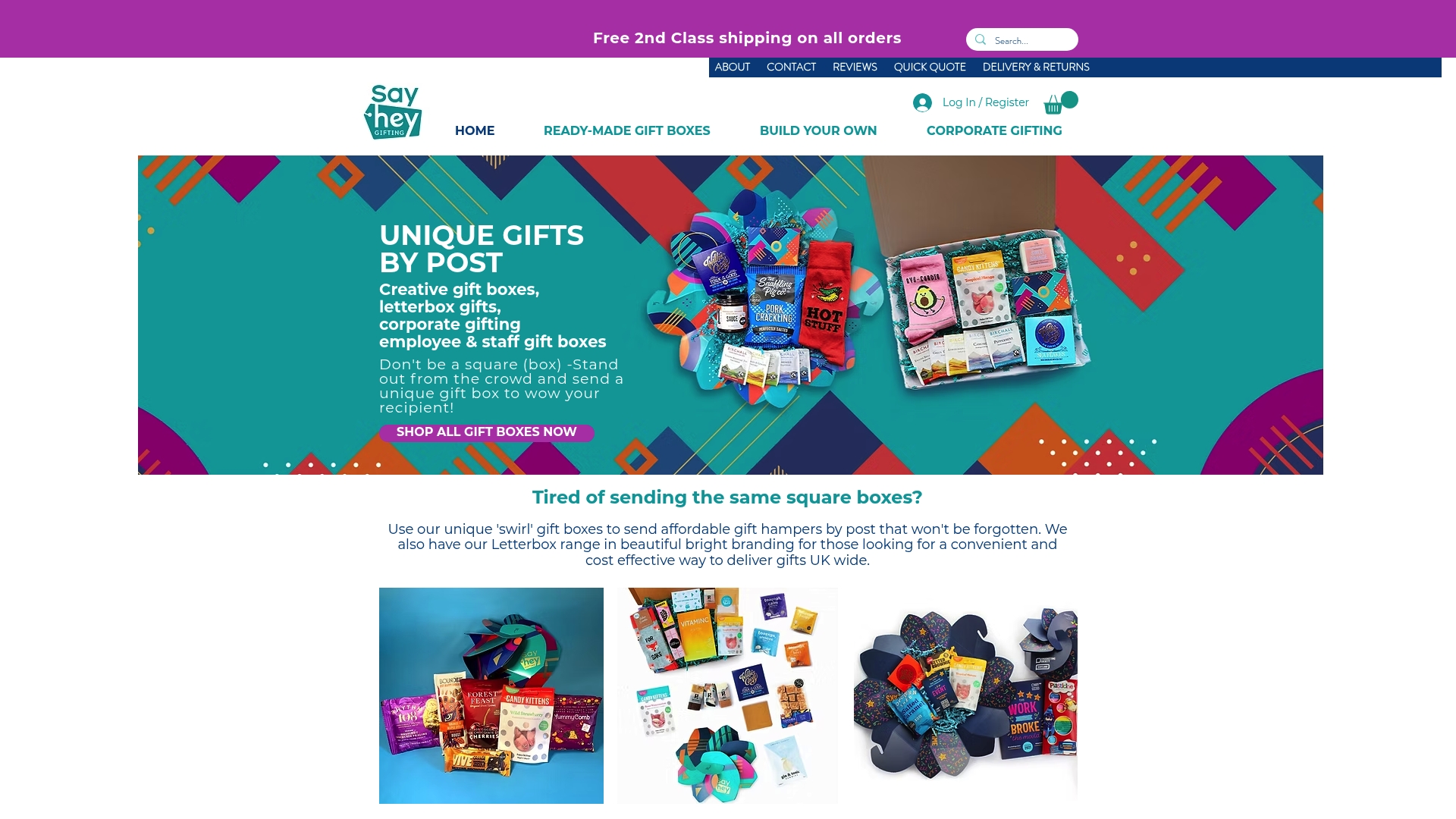
From ready-made staff gift boxes to fully customisable builds, Sayheygifting supports home delivery, letterbox-friendly despatch, and bulk office orders. Every box is presented with care, so the moment of opening feels as good as the gift inside. Browse the full range and find the delivery format that fits your team.
FAQ
What are the three main corporate gift delivery methods?
The three core methods are digital delivery via email or SMS codes, direct-to-home shipping for physical gifts, and centralised office distribution for team events. Each suits a different workforce setup and gifting occasion.
How far in advance should I plan staff gift delivery?
Plan at least six to eight weeks before your required receipt date for physical gifts. This allows time for production, address collection, courier transit, and contingency for any delivery issues.
Are letterbox gifts suitable for large remote teams?
Yes. Letterbox gifts are designed to fit through a standard letterbox without requiring recipient presence, which significantly reduces failed deliveries. They are one of the most practical formats for dispersed or hybrid teams.
How do I personalise gifts for a large workforce fairly?
Offer a curated selection of three to five options and let employees choose. This approach respects individual preferences, reduces waste, and scales well without requiring individual curation for every person.
Should I include a personal message with staff gifts?
Always. Packaging and a personalised message significantly improve how a gift is received. Even a printed note addressed by name adds warmth and signals genuine thoughtfulness rather than a generic gesture.
Recommended
Comments