
The role of branded corporate gifts in employee engagement

Branded corporate gifts are purposeful, company-branded items given to employees or clients to strengthen relationships, boost morale, and extend brand visibility through continued daily use. Known in the industry as promotional merchandise or corporate swag, these gifts go well beyond a logo on a mug. The role of branded corporate gifts sits at the intersection of employee recognition, brand marketing, and workplace culture. When chosen thoughtfully, they create lasting emotional connections that generic perks simply cannot replicate. Nearly 80% of consumers who receive a promotional item report a more favourable impression of the brand behind it. That figure alone makes the case for treating gifting as a serious business investment, not an afterthought.
How do branded corporate gifts boost employee loyalty and retention?
Branded gifts work because they make appreciation tangible. A well-chosen item tells an employee that the organisation noticed them, valued them, and invested in their experience. That feeling translates directly into retention numbers.

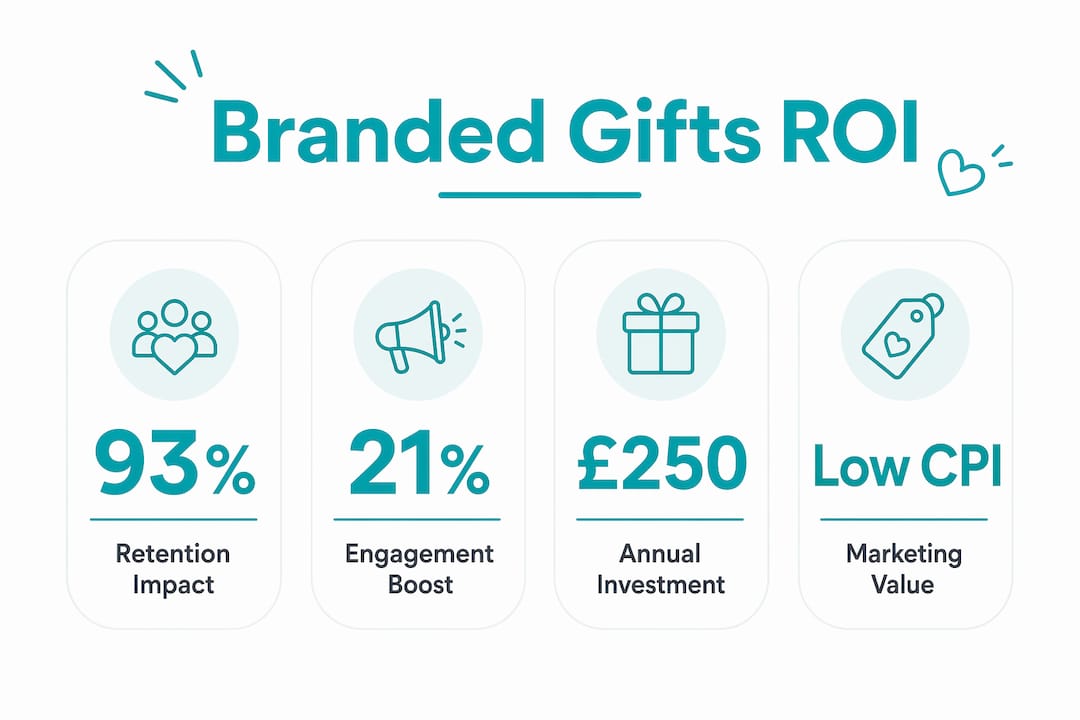
93% of workers say they would be more likely to stay another year if given the right piece of branded swag. That is not a marginal effect. It means a single, well-timed gift can shift an employee’s decision to stay or leave. Separately, 88% of workers report feeling more positive about their company after receiving a favourite branded item. Positivity at that scale feeds directly into discretionary effort and team cohesion.
The financial case is equally clear. Investing around £250 per employee per year in recognition programmes increases engagement by 21% and adds an average of 3.5 years to employee tenure. Employees who feel genuinely appreciated are five times more likely to stay. When you weigh that against the cost of replacing a single mid-level employee, the maths strongly favour a gifting budget.
Branded gifts also do something that salary increases cannot. They create a physical, visible reminder of belonging. An employee wearing a quality branded jacket or using a branded water bottle at the gym carries that sense of connection outside the office. That visibility reinforces identity and loyalty in a way that a payslip never will.
Key benefits of branded gifts for employee loyalty:
Retention signal: A valued gift communicates that the organisation sees the individual, not just the role.
Emotional connection: Physical items create memories and associations that digital recognition cannot replicate.
Brand identity: Employees who voluntarily use branded items become genuine ambassadors for your culture.
Tenure impact: Recognition investment directly correlates with longer average employee tenure.
Pro Tip: Track voluntary use, not just distribution. If employees are wearing or using your branded items outside work, your gifting programme is working. If items are sitting in drawers, it is time to rethink your product selection.
What types of branded corporate gifts are most effective?
The most effective branded corporate gifts are practical, high quality, and items employees would genuinely choose to buy for themselves. Usefulness drives longevity, and longevity drives brand impressions.
Prioritise practicality and quality
Product longevity determines cost-per-impression (CPI), which is the true measure of a gift’s marketing value. A £6 tote bag generates nearly 5,000 lifetime impressions at a CPI of roughly one tenth of a penny. Higher-priced items like quality fleece or outerwear maintain a similarly low CPI because they are used repeatedly over months or years. The upfront cost matters far less than how long the item stays in active use.
Employees increasingly prefer gifts that feel retail-quality. Sustainable and retail-quality branded gifts now drive gifting acceptance and brand affinity more than novelty or price alone. A branded item that looks and feels like something from a high-street shop will be kept and used. A cheap, poorly made alternative will be discarded, taking your brand impression with it.
Logo placement and branding subtlety
Subtle branding encourages use. A small, well-placed logo on quality drinkware or a premium notebook feels like a considered design choice. An oversized logo plastered across a low-quality item feels like advertising. Employees respond to the former with pride and the latter with indifference.
Gift category | Longevity | Brand impression potential | Employee preference |
Outerwear and fleece | High (years) | Very high | Strong |
Quality drinkware | High (years) | High | Strong |
Tote bags | Medium (months) | High (high visibility) | Moderate |
Notebooks and stationery | Medium (months) | Moderate | Moderate |
Low-quality novelty items | Low (weeks) | Low | Weak |
Pro Tip: When selecting gifts, ask yourself whether an employee would buy this item at full price in a shop. If the honest answer is no, choose something else. That single question filters out most poor gifting decisions.
For practical guidance on choosing valued employee gifts, the selection criteria matter as much as the budget.
How do branded gifts fit into corporate culture and HR strategy?
Branded gifting is most powerful when it is woven into the full employee lifecycle, not reserved for annual events. Onboarding gifts set the tone from day one. Work anniversary gifts mark milestones and signal that tenure is valued. Wellbeing gifts during challenging periods show genuine care. Each touchpoint builds a cumulative sense of belonging.
Recognition economics support this approach. Gifting budgets tied to turnover economics give HR leaders a credible framework for CFO conversations. When you can show that a £250 per head annual gifting investment reduces voluntary turnover by a measurable percentage, the budget conversation changes entirely. Gifting stops being a discretionary spend and becomes a retention tool with a calculable return.
Evolving employee expectations also shape what works. Authenticity matters deeply to modern workforces. Employees notice when a gift feels like a genuine expression of appreciation versus a bulk-ordered afterthought. Voluntary use and wear is the clearest signal of authentic gifting success. When 67% of swag organisers measure success only when employees voluntarily use or wear branded items, that tells you the industry has moved well beyond counting boxes shipped.
A practical approach to building gifting into your HR programme:
Map the employee lifecycle. Identify the key moments where a gift would feel meaningful: onboarding, probation completion, work anniversaries, promotions, and team achievements.
Set a per-head budget. Anchor it to recognition economics. The £250 per employee per year benchmark is a proven starting point.
Define success metrics. Voluntary use, reorder requests, and employee feedback are more meaningful than distribution numbers alone.
Align with your values. If sustainability is part of your employer brand, your gifts must reflect that. Eco-friendly staff gifts signal authenticity far more than a sustainability statement on your website.
Review annually. Employee preferences shift. What resonated in 2024 may feel dated in 2026. Build in a review cycle.
What are the measurable benefits and ROI of branded gift programmes?
The return on a branded gifting programme is measurable across two distinct dimensions: brand marketing value and employee retention economics.
On the marketing side, promotional products generate impressions at a CPI that outperforms most digital advertising channels. A practical branded item used daily in public spaces creates repeated real-world brand touches. Each use is an impression. Each impression builds familiarity and positive association. For HR leaders, this means gifting budgets serve a dual purpose: they retain employees and they market the brand simultaneously.
On the retention side, the numbers are compelling. A 21% increase in engagement from a structured recognition programme translates directly into productivity gains, reduced absenteeism, and lower voluntary turnover. Replacing a mid-level employee typically costs between 50% and 200% of their annual salary when you account for recruitment, onboarding, and lost productivity. A gifting investment that prevents even one departure per year pays for itself many times over.
The framework for measuring ROI is straightforward. Calculate your current voluntary turnover rate and the average replacement cost per role. Apply the retention improvement data from recognition research. Compare that saving against your annual gifting budget. For most organisations, the ROI case is clear within the first year. For a broader view of gifting ideas across occasions, aligning gifts to specific moments sharpens both the emotional and financial return.
Key takeaways
Branded corporate gifts deliver measurable retention, engagement, and brand visibility returns when programmes are built around quality, practicality, and voluntary use metrics.
Point | Details |
Retention impact | 93% of workers are more likely to stay another year after receiving the right branded gift. |
Recognition investment | Spending around £250 per employee per year on recognition increases engagement by 21% and adds 3.5 years to average tenure. |
CPI efficiency | Practical, high-quality items generate thousands of brand impressions at a fraction of a penny per impression. |
Voluntary use as success metric | 67% of gifting organisers measure success only when employees voluntarily use or wear branded items. |
Lifecycle integration | Gifting works best when mapped across the full employee lifecycle, from onboarding through to long-service recognition. |
Why voluntary use is the only gifting metric that matters
I have seen gifting programmes celebrated internally because thousands of branded items were shipped on time and under budget. Six months later, those items were in landfill. Distribution is not success. Voluntary use is success.
The shift in thinking is significant. When you start asking “would an employee buy this themselves?” before every gifting decision, your entire selection process changes. You stop ordering the cheapest item that fits the logo. You start thinking about what genuinely fits into someone’s daily life. Quality drinkware, well-made outerwear, and thoughtfully curated gift boxes all pass that test. Branded stress balls and cheap pens rarely do.
I also think the industry underestimates the power of subtle branding. A small embroidered logo on a quality fleece feels like a badge of belonging. The same logo screaming across a synthetic polo shirt feels like a uniform nobody asked for. The difference in voluntary wear rates between those two items is enormous, and that difference is the entire ROI gap between a gifting programme that works and one that does not.
The most effective corporate gifting strategies I have seen share one characteristic: they treat employees as individuals with genuine preferences, not as a distribution list. That means varying gifts by role, tenure, and occasion. It means choosing items with real retail appeal. And it means measuring what actually matters, which is whether people use the gift, not whether the logistics ran smoothly.
— Craig
Sayheygifting: corporate gifting that employees actually want to keep
Branded gifting only delivers results when the gifts themselves are worth keeping. Sayheygifting specialises in creative corporate gifting designed around exactly that principle: quality, thoughtfulness, and genuine employee appeal.
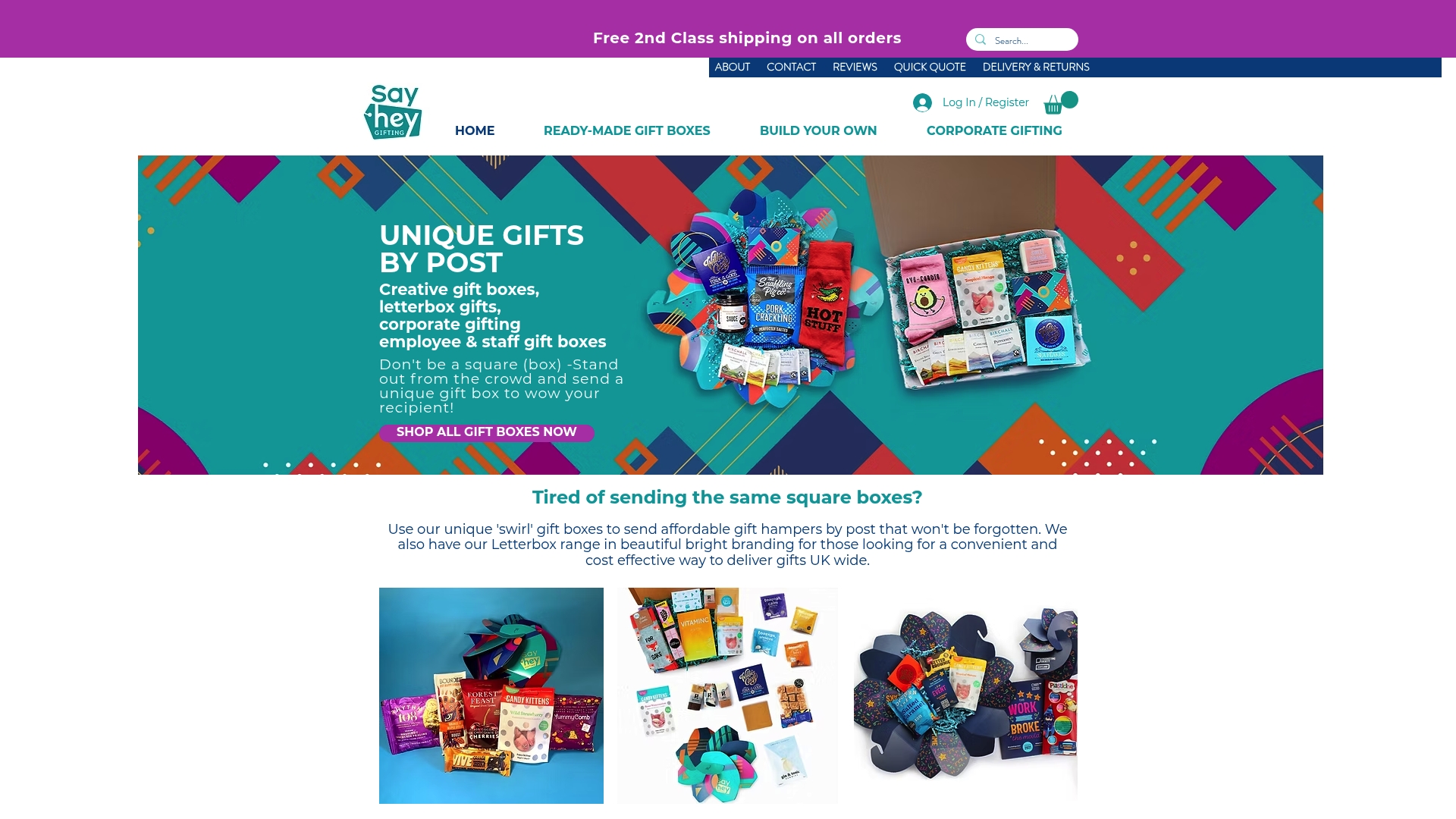
From curated employee gift boxes to letterbox gifts, hampers, and fully customisable build-your-own options, Sayheygifting makes it straightforward to match the right gift to the right moment across your employee lifecycle. Every product is chosen with the voluntary-use test in mind. If it would not earn a place on someone’s desk or in their wardrobe, it does not make the range. Whether you are recognising a work anniversary, welcoming a new starter, or rewarding a team achievement, Sayheygifting has a gift that will genuinely land well.
FAQ
What is a branded employee gift?
A branded employee gift is a physical item featuring company branding, given to an employee as a gesture of recognition or appreciation. It differs from a generic promotional item in that it is selected with the recipient’s preferences and daily use in mind.
Why do branded gifts boost employee loyalty?
Branded gifts create a tangible expression of appreciation that reinforces belonging and positive sentiment. Research shows 88% of employees feel more positive about their company after receiving a favourite branded item, and 93% say a well-chosen gift makes them more likely to stay another year.
How do you measure the success of a corporate gifting programme?
The most reliable measure is voluntary use. When employees wear or use branded items unprompted, outside of work, the gift has genuinely resonated. Distribution numbers alone tell you nothing about impact.
What is the recommended budget for employee recognition gifting?
Recognition research points to approximately £250 per employee per year as a benchmark that delivers a 21% increase in engagement and adds an average of 3.5 years to employee tenure. That figure should be adjusted based on your organisation’s turnover rate and replacement costs.
How do branded gifts support brand visibility beyond the workplace?
Practical branded items used in public generate repeated real-world brand impressions. A quality tote bag, for example, can generate nearly 5,000 lifetime impressions at a cost-per-impression of roughly one tenth of a penny, making branded gifts one of the most cost-effective brand visibility tools available.
Recommended
Comments