
Why corporate gifts matter: the 2026 business case

Corporate gifting is defined as the practice of sending physical gifts to clients, employees, or partners to build and sustain commercial relationships. The question of why corporate gifts matter has moved well beyond goodwill gestures. Structured gifting programmes deliver up to five times greater ROI in client retention and employee engagement. That figure alone repositions gifting from a discretionary budget line to a measurable business discipline. The global corporate gifting market is projected to reach $956.93 billion in 2026, reflecting how seriously organisations now treat physical touchpoints as part of their relationship strategy.
Why corporate gifts matter for business performance
Corporate gifting delivers quantifiable outcomes across three core areas: client retention, sales conversion, and employee engagement. Each of these areas responds directly to the quality and consistency of your gifting programme.
Client retention and revenue impact
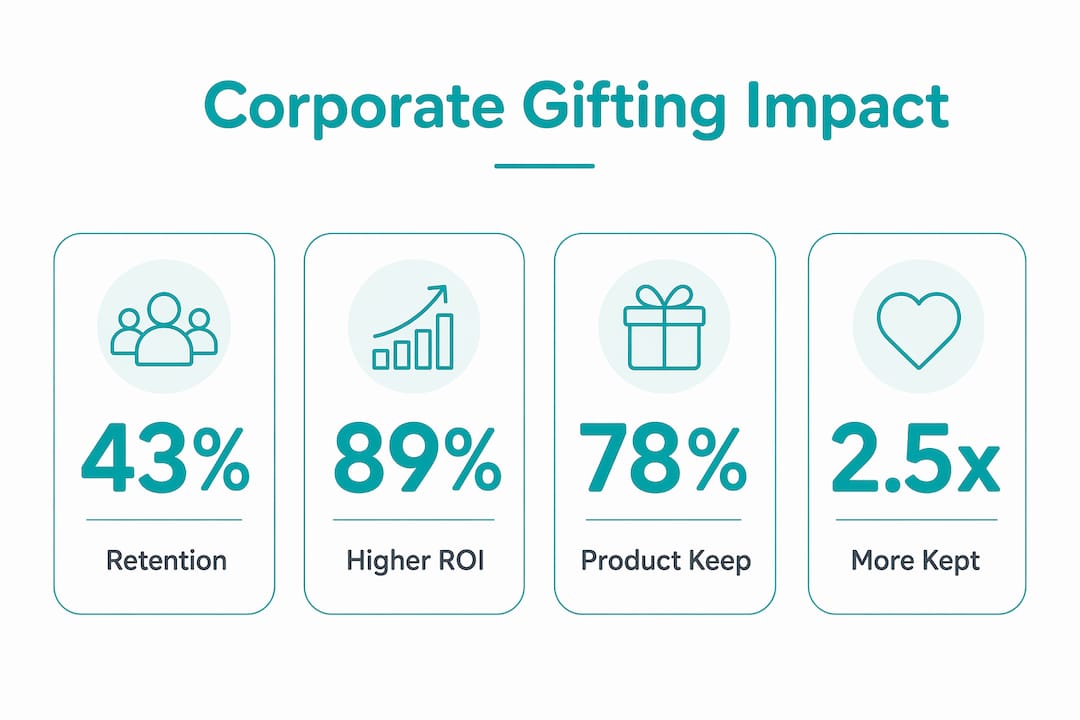
Customer retention rates improve by as much as 43% when gifting is embedded into the client relationship model. Retaining an existing client costs significantly less than acquiring a new one, so a 43% improvement in retention translates directly to reduced acquisition spend and compounding revenue. Gifting achieves this because it creates deliberate, human moments of acknowledgment that emails and calls cannot replicate.

Sales conversion also responds to gifting. When clients receive a thoughtful, well-timed gift before or during a negotiation, they experience a psychological pull towards reciprocity. This is not manipulation. It is a well-documented human response to genuine generosity, and it shows up in renewal rates and contract signings.
Employee engagement and morale
Recognition through gifting has a direct effect on how employees feel about their workplace. Employees who feel genuinely appreciated report higher motivation, lower absenteeism, and stronger loyalty to their organisation. Employee gifting and team reward programmes that are structured and consistent outperform ad hoc gestures by a wide margin.
The key benefits of a well-run gifting programme include:
Improved retention rates among both clients and staff, reducing costly turnover
Higher engagement scores linked to recognition and appreciation
Stronger brand perception among recipients who associate the brand with care and quality
Increased referrals from clients who feel genuinely valued
Measurable ROI when gifting is tracked against relationship milestones
How does personalisation influence the impact of corporate gifts?
Personalised corporate gifts generate 89% higher ROI compared to generic items. That gap is not marginal. It reflects the difference between a gift that says “we value you as an individual” and one that says “we sent this to everyone on our list.”
Why personalisation works
94% of corporate leaders believe personalised gifts create a deeper personal connection that influences renewal decisions. When a recipient opens a gift that reflects their preferences, interests, or recent achievements, it triggers an emotional memory. That memory becomes associated with your brand. Generic gifts, by contrast, are often forgotten or discarded within days.
Personalisation does not require elaborate customisation. It means paying attention. A gift aligned to a recipient’s known interests, dietary preferences, or professional milestones communicates far more than a branded pen ever could.
Timing amplifies the effect
Well-timed gifts sent immediately after significant milestones reinforce relationship equity more effectively than seasonal gifts sent to everyone in december. The milestones that matter most include:
Contract signing or renewal — reinforces the decision and sets a positive tone
Project completion — acknowledges effort and shared achievement
Work anniversaries — demonstrates long-term appreciation for loyalty
Onboarding — creates an immediate sense of belonging for new employees
Personal milestones — birthdays or life events that show genuine human interest
Pro Tip: Map your gifting calendar to your client and employee relationship cycle, not to the retail calendar. A gift sent the week a client renews their contract lands with far more meaning than a generic Christmas hamper.
What makes a corporate gift genuinely useful and valued?
A gift that sits in a drawer is not a gift. It is a wasted opportunity. 78% of consumers keep promotional products they find useful, and 76% do more business with brands that provide branded merchandise they actually use. Usefulness is not a nice-to-have quality in a corporate gift. It is the primary criterion for selection.
The endowment effect and daily integration
Gifts that integrate into recipients’ daily routines without requiring any behavioural change benefit from the psychological endowment effect. Once a person uses an item regularly, they begin to feel ownership over it. That ownership creates a positive emotional association with the brand that provided it. A quality notebook, a well-designed travel accessory, or a curated food hamper all achieve this naturally.
The opposite is also true. Oversized logos, cheap materials, and impractical items hinder recipient retention and create negative brand associations. A gift that feels cheap communicates that the sender did not care enough to choose well.
Pro Tip: Choose gifts that fit into what your recipient already does. If they travel frequently, a quality travel kit works. If they work from home, a curated desk or wellbeing box lands better than a branded mug.
The table below shows the characteristics that separate effective corporate gifts from ineffective ones.
Characteristic | Effective gift | Ineffective gift |
Branding | Subtle, tasteful logo placement | Oversized logo dominating the item |
Quality | Durable, premium materials | Cheap, disposable construction |
Relevance | Aligned to recipient’s routine or interests | Generic, one-size-fits-all selection |
Practicality | Used daily or regularly | Decorative only, quickly discarded |
Presentation | Thoughtfully packaged and personalised | Plain, unboxed, or impersonal |
Categories that consistently perform well include curated food and drink hampers, quality desk accessories, wellbeing and self-care sets, and sustainable corporate gift options that reflect modern values. The common thread is that each category serves a genuine need in the recipient’s life.
How can businesses build effective corporate gifting programmes?
Strategic B2B gifting has evolved into a measurable discipline integral to long-term revenue management. The organisations seeing the strongest results treat gifting as a relationship architecture system, not a seasonal tradition.
Building your gifting programme step by step
Segment your audience. Separate clients, prospects, and employees into distinct groups. Each group has different relationship stages and different emotional needs. A new employee requires a different gift experience than a client renewing their fifth contract.
Define your trigger events. Identify the business milestones that warrant a gift. Onboarding, contract renewal, project completion, work anniversaries, and personal milestones are the most impactful. Gifting aligned with relational milestones builds compounding relational equity over time.
Set a per-recipient budget. Consistency matters. A programme where some recipients receive premium gifts and others receive token items creates inequality and resentment. Set clear budget bands by relationship tier and stick to them.
Choose gifts for usefulness and quality. Apply the criteria from the section above. Prioritise items that integrate into daily routines, carry subtle branding, and reflect genuine thoughtfulness. Explore curated corporate gift boxes as a reliable format that combines quality and personalisation.
Track outcomes. Measure retention rates, renewal rates, and engagement scores before and after implementing your programme. Gifting that cannot be measured cannot be improved.
The most effective programmes also use technology to automate delivery scheduling and track recipient preferences over time. Automation removes the risk of missed milestones and ensures consistency across large teams or client bases.
Key governance principles for a gifting programme include:
A clear policy on gift values to comply with anti-bribery regulations
A centralised record of gifts sent to avoid duplication or gaps
Regular review of gift selection to keep the programme fresh and relevant
Feedback mechanisms to understand what recipients actually value
Key takeaways
Corporate gifts deliver measurable business value when they are personalised, well-timed, and selected for genuine usefulness rather than brand visibility alone.
Point | Details |
ROI is measurable | Structured gifting programmes deliver up to five times greater ROI in retention and engagement. |
Personalisation multiplies impact | Personalised gifts generate 89% higher ROI and are far more likely to be retained by recipients. |
Timing is critical | Gifts sent at relationship milestones outperform generic seasonal gifts in building loyalty. |
Usefulness drives retention | 78% of recipients keep gifts they find useful, creating lasting brand exposure. |
Programme structure matters | Segmentation, trigger events, and outcome tracking transform gifting from a gesture into a system. |
Corporate gifting in 2026: what I have learned from watching it evolve
The businesses I have seen get gifting right share one quality: they treat it as a human act, not a marketing tactic. The ones who get it wrong are usually the ones who spend the most. They send expensive branded items with enormous logos, time everything around Christmas, and then wonder why the response is lukewarm.
The real shift happening in 2026 is that gifting is filling the emotional gap left by digital communication fatigue. Emails are ignored. Notifications are muted. A physical gift that arrives at the right moment, in beautiful packaging, with a personal note, cuts through everything. It creates what I would call a micro-moment of genuine connection. Those moments are rare in business. They are also extraordinarily powerful.
The pitfall I see most often is the disconnect between the gift and the recipient. A wellness hamper sent to someone who has just signed a major contract feels misaligned. A celebratory food and drink box sent at the same moment feels exactly right. The difference is not the cost. It is the attention. When you show a client or employee that you noticed what matters to them, you build something that no email campaign can replicate.
My honest advice is to start small and start intentionally. Pick three trigger events in your business cycle. Choose gifts that reflect genuine knowledge of your recipients. Measure what happens to your retention and engagement scores over the following two quarters. The data will make the case for you.
— Craig
Thoughtful gifting made easy with Sayheygifting
Sayheygifting specialises in curated corporate gift boxes designed to make every recipient feel genuinely valued. Whether you are recognising a long-standing client, welcoming a new team member, or rewarding staff for outstanding effort, Sayheygifting offers personalised options that reflect real thoughtfulness.
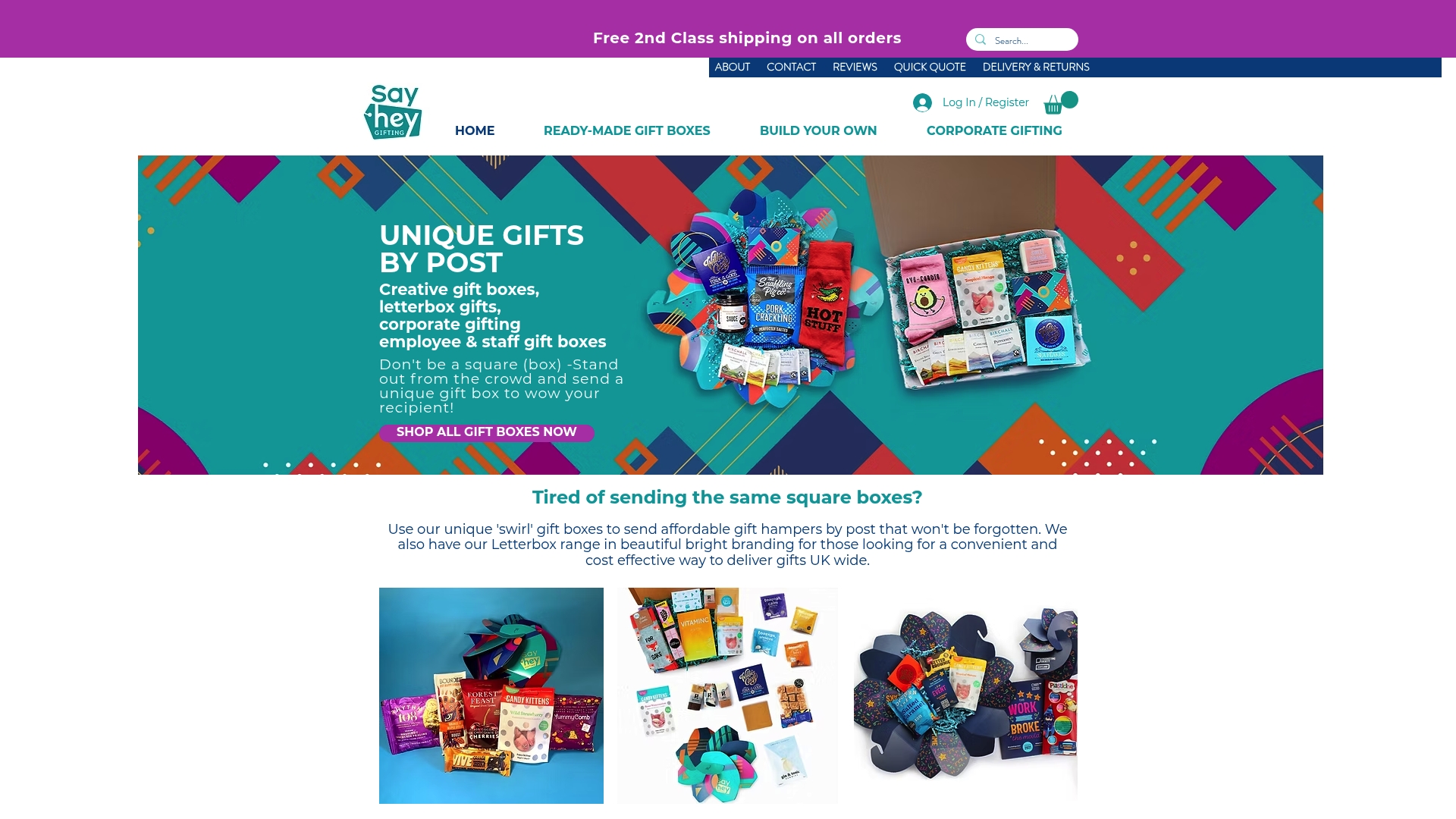
From letterbox gifts and hampers to fully build your own gift box options, every product is chosen for quality, presentation, and the kind of lasting impression that strengthens relationships. Sayheygifting also offers employee gift boxes tailored specifically for staff recognition, making it straightforward to run a consistent, high-quality gifting programme at any scale.
FAQ
Why do corporate gifts matter for employee retention?
Corporate gifts signal genuine appreciation, which directly improves how employees feel about their workplace. Employees who feel recognised are more loyal, more engaged, and less likely to leave.
How does personalisation affect the value of a corporate gift?
Personalised gifts generate 89% higher ROI than generic alternatives and are 2.5 times more likely to be kept by recipients. Personalisation communicates individual attention, which creates a stronger emotional connection.
When is the best time to send a corporate gift?
Gifts sent immediately after significant milestones, such as contract signings, project completions, or work anniversaries, have the greatest impact. Milestone-based timing outperforms generic seasonal gifting in building lasting loyalty.
What qualities make a corporate gift worth keeping?
Gifts that are practical, durable, and subtly branded are kept longest. Items that integrate naturally into a recipient’s daily routine benefit from the endowment effect, creating ongoing positive associations with your brand.
How do you measure the ROI of a corporate gifting programme?
Track client retention rates, contract renewal rates, and employee engagement scores before and after implementing your programme. Companies with structured gifting programmes report up to five times greater ROI in these metrics compared to those without one.
Recommended
Comments