
Are P11D staff gifts taxable? The HMRC rules explained

Most staff gifts under £50 can be given completely tax-free, provided they meet HMRC’s trivial benefits conditions. Once a gift is linked to performance, paid in cash or cash vouchers, or costs more than £50, it becomes a taxable benefit that must be reported.
You have three main routes for reporting taxable gifts: a P11D form for each employee, a PAYE Settlement Agreement (PSA) that lets you settle the tax on the company’s behalf, or payrolling benefits through your payroll software so tax is deducted in real time.
Under £50, non-cash, not performance-related, infrequent → tax-free trivial benefit
Over £50, cash, or reward-based → taxable, report via P11D, PSA, or payrolling
Directors of close companies → capped at £300 per year in trivial benefits
Staff parties → separate £150 per head annual exemption applies
Quick fact: the trivial benefits exemption has no annual limit for ordinary employees, but directors of close companies face a £300 yearly ceiling across all trivial benefits combined.
Key Takeaways
Small, non-cash staff gifts under £50 stay tax-free under HMRC’s trivial benefits rules, but performance-linked or cash gifts require P11D, PSA, or payroll reporting.
Point | Details |
Apply all four trivial benefit tests | Cost ≤£50, non-cash, not performance-related, and infrequent must all be true together. |
Watch the director cap | Directors of close companies face a £300 annual limit across all trivial benefits combined. |
Choose your reporting route early | Decide between P11D, payrolling, or a PSA before the tax year ends to avoid grossing-up surprises. |
Separate event costs from gifts | The £150 annual function exemption and gift trivial benefits are assessed independently. |
Use compliant, non-cash formats | Sayhey Gifting’s letterbox gifts and hampers under £50 are structured to fit within HMRC’s exemption. |
Authoritative links to HMRC and advisor guidance
For the official rules, start with gov.uk’s trivial benefits page and the P11D completion guidance. For practitioner interpretation, Hawsons’ Christmas tax guide covers seasonal gifting scenarios in plain terms.
Table of Contents
Trivial benefits: the £50 rule and director cap
The trivial benefits exemption is the single most useful tool in your gifting toolkit, and it hinges on four conditions that all have to be met at once. Miss one, and the whole gift becomes taxable, not just the portion over any nominal limit.
To qualify, a gift must:
Cost £50 or less per employee (including VAT)
Not be cash or a cash voucher
Not be given as a reward for performance, targets, or as part of a contractual entitlement
Be provided infrequently, not as a regular pattern
HMRC’s guidance confirms these four tests apply to every trivial benefit; directors of close companies face an annual cap on the total value of trivial benefits received in that tax year.
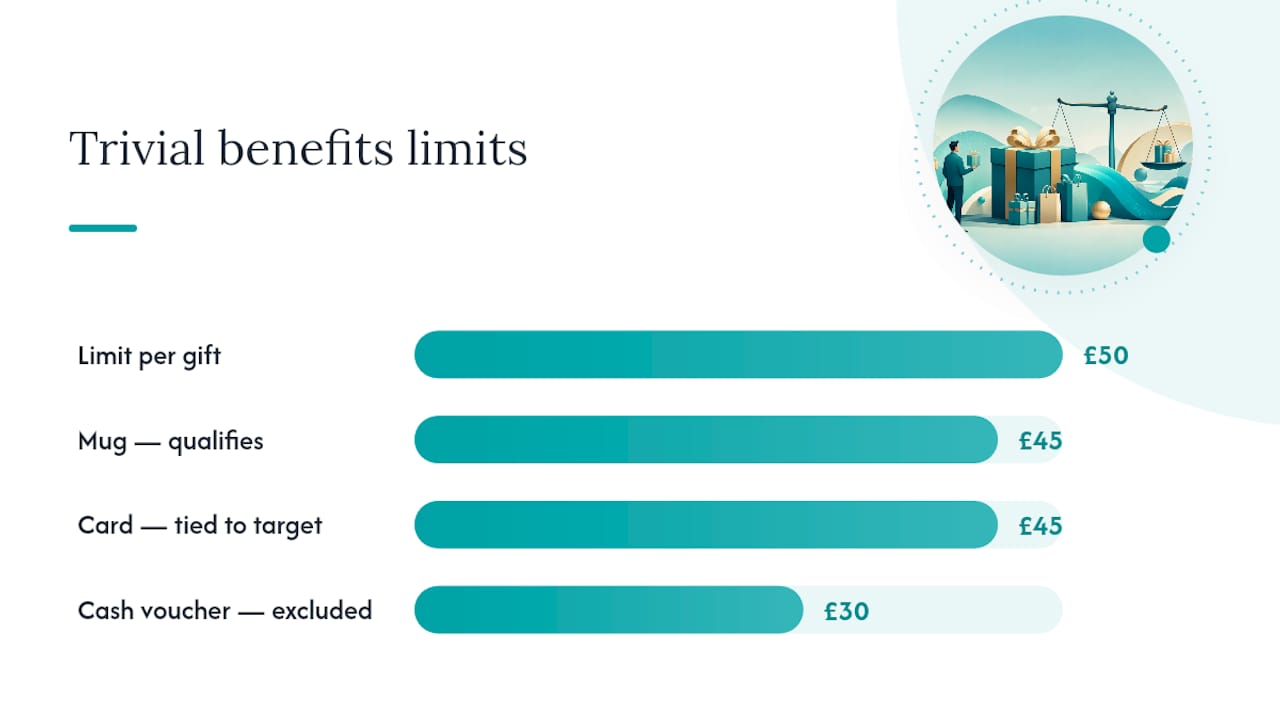
Here’s how that plays out in practice. A £45 branded mug and chocolate hamper sent to mark a work anniversary qualifies. A £45 retailer gift card handed out for hitting a sales target does not, because it’s tied to performance, regardless of the value. A £30 cash voucher fails outright because cash equivalents are excluded entirely, even at low value. A bottle of wine sent “just because” qualifies; the same bottle sent every Friday starts to look like a regular benefit, which could tip it out of the exemption.
Pro Tip: Keep a simple log for every gift: recipient name, date, cost, reason, and who approved it. If HMRC ever asks questions, this record does the explaining for you.
When gifts are taxable: P11D, Class 1A NIC and the PAYE Settlement Agreement
Once a gift fails any of the trivial benefit conditions, it becomes a benefit in kind. That means one of three things has to happen: you report it on a P11D, you payroll it through your payslip software, or you fold it into a PAYE Settlement Agreement.
P11D reporting — each employee needs their own form listing all non-exempt benefits, submitted alongside a P11D(b) summary that calculates the employer’s Class 1A National Insurance liability.
Payrolling benefits — you register with HMRC in advance and tax the benefit through payroll each pay period, which avoids a separate P11D for that item.
PAYE Settlement Agreement — you agree with HMRC to pay the tax and National Insurance on the employees’ behalf, so staff never see a deduction or a tax code change.
A PSA works on a “grossed-up” basis: because you’re paying the tax that would otherwise fall on the employee, HMRC calculates the figure as if the employee had already paid tax on it and needs it topped back up. That often makes a PSA more expensive than reporting the same benefit on a P11D, but it protects the goodwill of the gift. Nobody wants a thank-you present to arrive with an unexpected tax bill attached.
Timing matters here. Apply for a PSA well before the tax year ends rather than scrambling afterwards, since Menzies notes that early application avoids disputes over which benefits are covered.
Employers must file P11D and P11D(b) returns online for most cases from 6 April 2023 onwards. Missing the deadline or filing on paper when you’re not exempt can trigger penalties and interest, so mark the date in your compliance calendar the same way you would a VAT return.
Staff parties and the £150 annual function exemption
Separate from trivial benefits sits the annual function exemption, which covers your Christmas party or summer social rather than individual gifts. To qualify, the event must be open to all employees at a location, held annually, and cost a per-head amount below an HMRC threshold, inclusive of VAT and any transport or accommodation provided.

Guests change the maths. If partners are invited, their attendance counts towards the per-head total, so a combined spend evenly divided among attendees works out to a per-head amount that should be compared against the exemption limit.
Gifts handed out at the party are assessed separately from the event itself. A £40 hamper given out on the night can still qualify as a trivial benefit in its own right, provided it meets the usual four conditions.
Before you finalise a Christmas or summer party budget, check:
Total cost divided by total attendees (including plus-ones)
VAT included in that per-head figure
Whether it’s the only annual function, or one of several that might combine to exceed £150
Pro Tip: If you’re close to the £150 ceiling, trim the extras (venue upgrades, transport) rather than cutting the meal or gifts. Small line items are easier to adjust than the headline event.
Common pitfalls and a practical compliance checklist for employers
Most P11D headaches for staff gifts trace back to the same handful of mistakes, and they’re avoidable once you know what to watch for.
Linking gifts to performance. A voucher for “employee of the month” is taxable no matter how small, because reward-for-performance breaks the trivial benefit test outright.
Using cash or cash vouchers. ACCA’s guidance flags this as one of the most common employer errors, since a £30 Amazon gift card feels trivial but counts as a cash-equivalent.
Treating repeated small gifts as automatically exempt. Frequency matters; a weekly “treat” starts to look like disguised remuneration.
Build a simple approval workflow: set an internal threshold (many advisers suggest flagging anything above £30 for manager sign-off), require a written business reason, and keep records for at least the current tax year plus one. On the payroll side, decide upfront whether you’ll payroll benefits, register for a PSA, or handle everything via P11D, because switching mid-year adds administrative friction.
If you do use a PSA, budget for the grossed-up cost rather than the gift’s face value. A £200 taxable gift for a higher-rate taxpayer can cost considerably more than £200 once tax and Class 1A National Insurance are added on top, so build that buffer into your gifting budget before you commit to numbers.
Compliant gifting ideas and how Sayhey Gifting can help HR teams stay within HMRC rules
Staying within the trivial benefits threshold doesn’t mean scaling back the thoughtfulness; check out these best new mum gifts UK for practical and breastfeeding-friendly ideas that also fit nicely within gifting policies. Several gift formats sit comfortably under £50 while still landing well.
A letterbox gift under £10 works well for small, frequent touches like welcome gifts or thank-yous.
A curated hamper priced under £50 covers birthdays, work anniversaries, or a “just because” moment without tipping into taxable territory.
Non-cash retailer gift boxes qualify where a cash voucher wouldn’t, since the exemption specifically excludes cash and cash-equivalents.
When ordering in bulk, ask for individualised invoicing or packing lists per recipient. This gives you a clean paper trail showing exactly what each employee received and at what cost, which matters if HMRC ever queries whether the exemption applies. Keep the messaging on the card focused on appreciation rather than achievement. “Thanks for being part of the team” preserves the exemption; “Well done on hitting target” does not.
What UK employers get wrong about P11D staff gifts
The advice most employers get on staff gifts is technically correct and practically useless. “Keep it under £50 and you’re fine” ignores the fact that the four conditions have to work together, not independently, and it’s the interaction between them that trips people up. A £20 gift tied to a sales league table fails just as hard as a £200 unconditional one.
What’s underrated is recordkeeping. Most HR teams treat the £50 threshold as the whole compliance job and skip the paper trail entirely. That’s backwards. HMRC rarely disputes a genuinely trivial gift; it disputes employers who can’t demonstrate the gift met the conditions when asked. A one-line spreadsheet entry costs nothing and settles the question before it’s raised.
If you take one thing from this guide, prioritise separating your gift messaging from your performance messaging entirely, even informally. Once “thank you” and “well done” start blending together in how gifts are framed, the exemption gets harder to defend, and that’s a self-inflicted problem HR controls can prevent from day one.
— Craig
A simpler way to keep staff gifts compliant and thoughtful
Sayhey Gifting gives HR teams a way to send genuinely thoughtful gifts without the guesswork of pricing each one against HMRC’s £50 threshold, because our letterbox gifts and hampers are built with clear, itemised pricing from the outset.
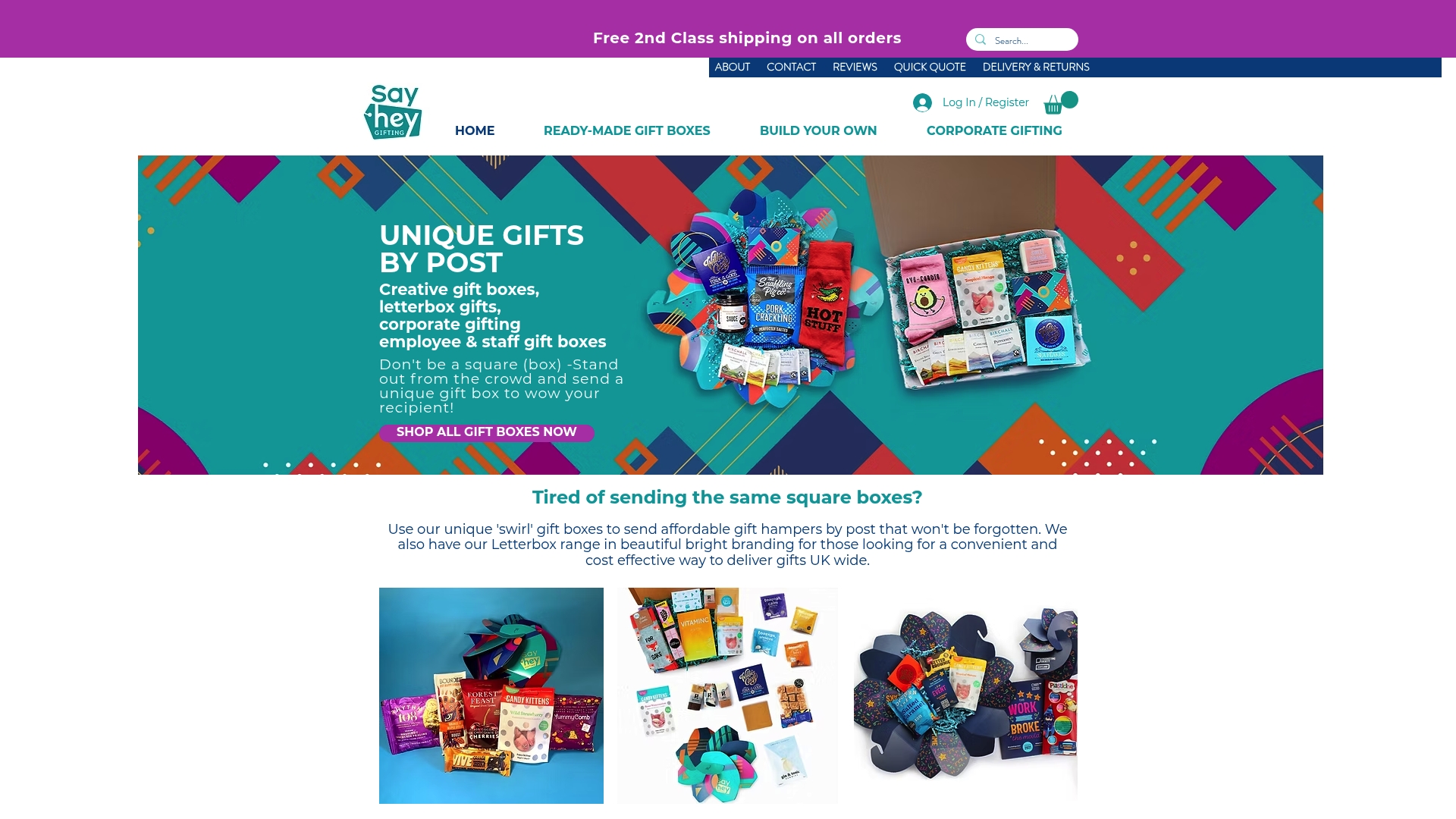
Rather than assembling ad hoc bundles and hoping the total lands under the limit, you can choose from ready-priced options, including a letterbox gift under £10 for frequent touches or a build-your-own gift box where every addition shows its cost as you go. For bulk orders, we can provide individualised invoicing per recipient, giving you the documentation trail that supports your trivial benefits record without extra admin on your end.
If you’re planning appreciation gifts, birthdays, or a seasonal round of thank-yous, browse the employee gift boxes range and put together an order that fits comfortably within HMRC’s exemption before you check out.
This article is general information, not a substitute for advice from a qualified financial advisor. Consult a qualified financial professional about your own circumstances before acting on anything here.
Sources
FAQ
What are the HMRC rules for gifts to employees?
Gifts costing £50 or less, that are non-cash, not performance-related, and given infrequently, qualify as tax-free trivial benefits. Anything failing these tests becomes a taxable benefit reportable via P11D, payroll, or a PSA.
Are staff gifts tax deductible?
Staff gifts are generally an allowable business expense for corporation tax purposes, separate from whether the gift is taxable on the employee. The trivial benefits exemption addresses the employee’s tax position, not your company’s deduction.
Can I give gifts to my employees?
Yes, and most small, occasional gifts can be given tax-free under the trivial benefits rules. Directors of close companies face a £300 annual cap, while other employees have no fixed yearly limit as long as each gift is genuinely infrequent.
What are the tax rules for gifts in the UK?
Non-cash gifts under £50 that aren’t tied to performance are exempt from tax and National Insurance. Gifts over that threshold, cash vouchers, or performance-linked rewards must be reported on a P11D or settled through a PAYE Settlement Agreement.
Do gift vouchers count as trivial benefits?
Non-cash retailer vouchers can qualify if they meet the £50 limit and other conditions, but cash vouchers (redeemable for cash) are always excluded from the trivial benefits exemption regardless of value.
Recommended
Comments